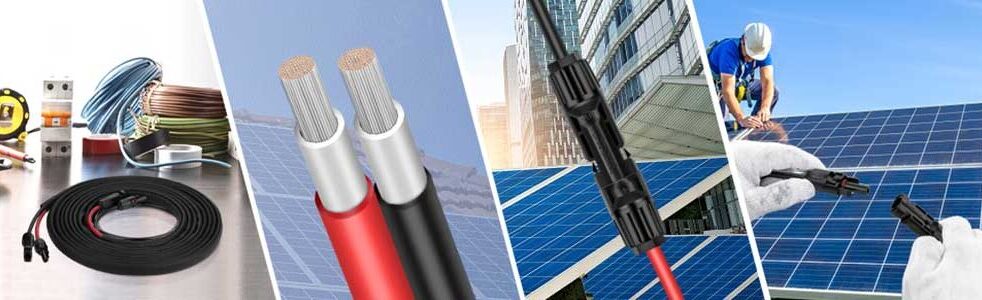
Solar Cable (PV Cable) — 1500V DC, TÜV Certified
Solar Cable & PV Cable Solutions | TUV Certified Solar Cable,
UL Listed PV Cable, CE
RoHS Solar Cable, IEC
62930 Cable
High-performance DC solar cables for reliable solar power systems, custom
sizes & wholesale available.
H1Z2Z2-K Solar DC Cable (PV Cable)


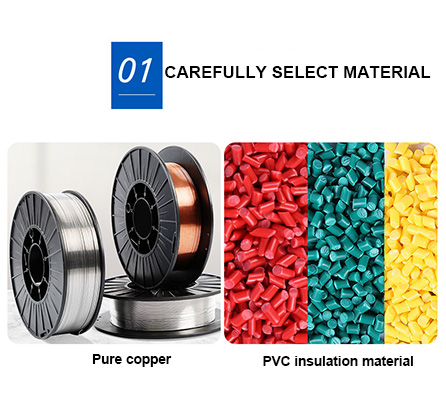
Conductor | Stranded tinned copper, Class 5 (IEC 60228) |
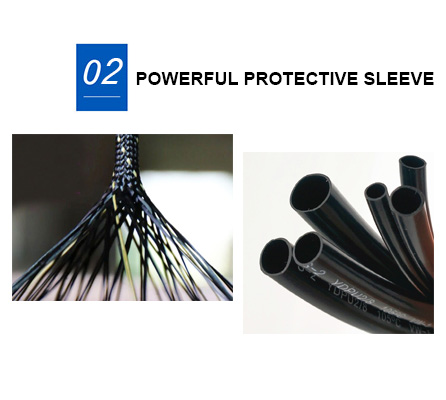
Insulation + sheath | Irradiated cross-linked polyolefin (XLPO), halogen-free, UV-resistant |
Rated voltage | 1000 V AC / 1500 V DC |
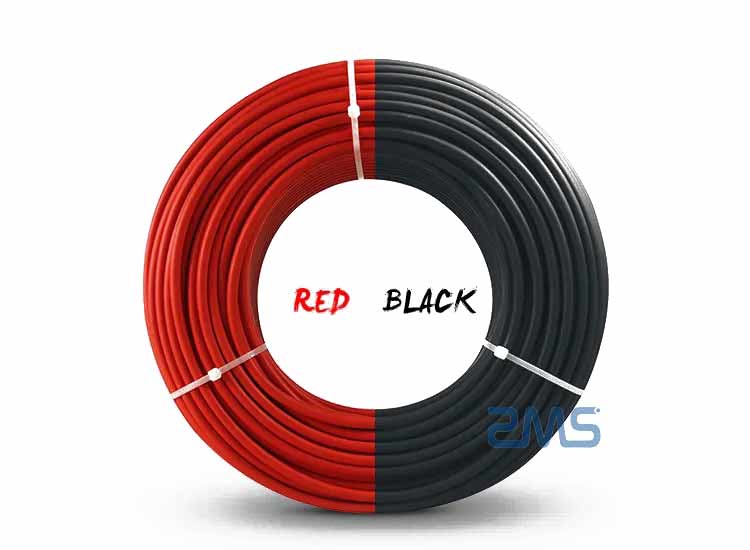
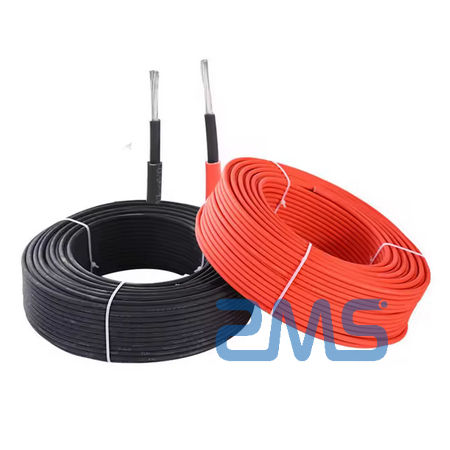
Cores | Single-core (red positive, black negative) or twin-core parallel |
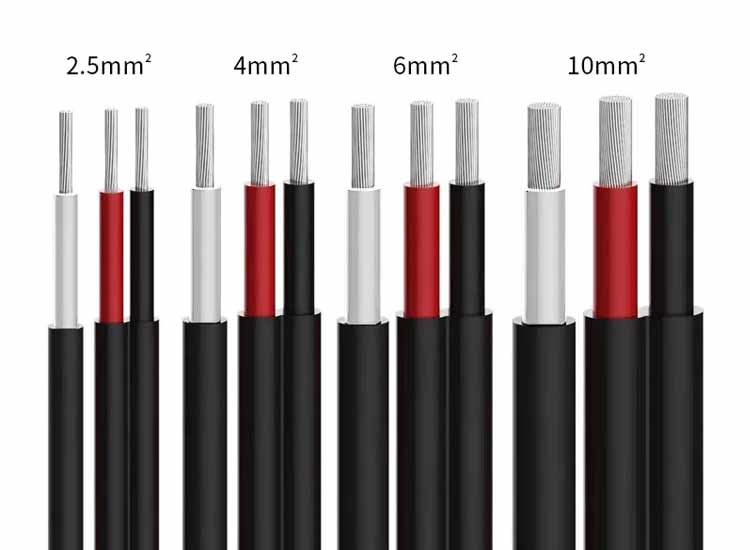
Cross-sections | 1.5, 2.5, 4, 6, 10, 16, 25, 35, 50, 70, 95 mm² |
Working temperature | −40 °C to +90 °C continuous; max conductor 120 °C |
Short-circuit rating | 200 °C for 5 seconds |
Voltage test | AC 6.5 kV / DC 15 kV |
Standards | IEC 62930, EN 50618, IEC 60332-1 (flame retardant) |
Certification | TÜV (German certification body) |
Color | Red (+) and black (−) |
Solar Cable Types & Applications

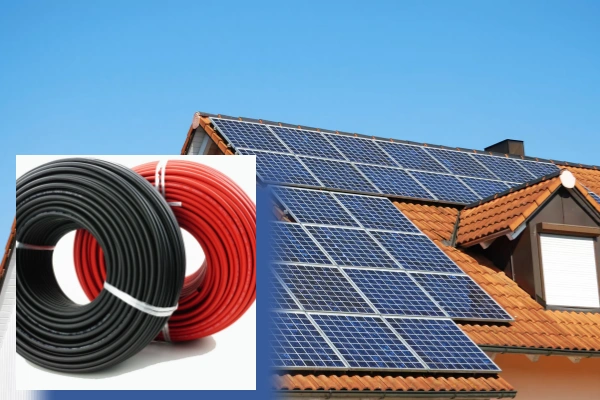
PV String Cable (H1Z2Z2-K / PV1-F)
The main DC cable between solar panels and the inverter/combiner box. Available as single-core (red/black) or twin-core. 2.5 mm² for residential strings, 4–6 mm² for longer runs, 10 mm² for commercial mains.

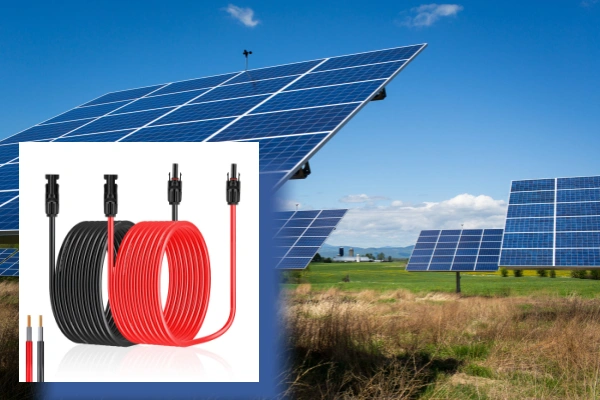
MC4 Extension Cable
Pre-assembled with MC4 connectors on both ends, used to extend the distance between panels or between panel strings. Available in 1 m, 3 m, 5 m, or custom lengths. Eliminates on-site crimping errors.

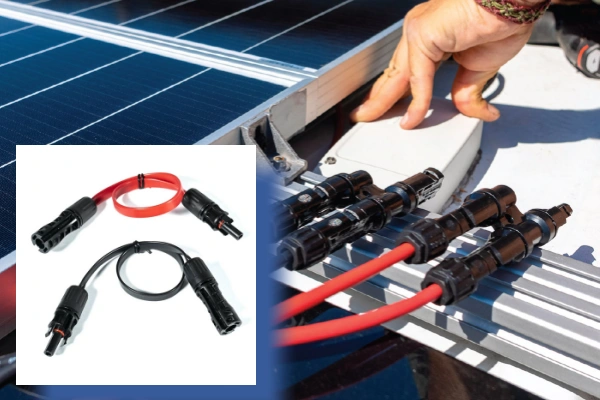
MC4 Connector Cable (Factory Assembled)
One end pre-crimped with MC4 connector, the other end bare for inverter/combiner box connection. Factory-crimped connections are more reliable than field crimping.

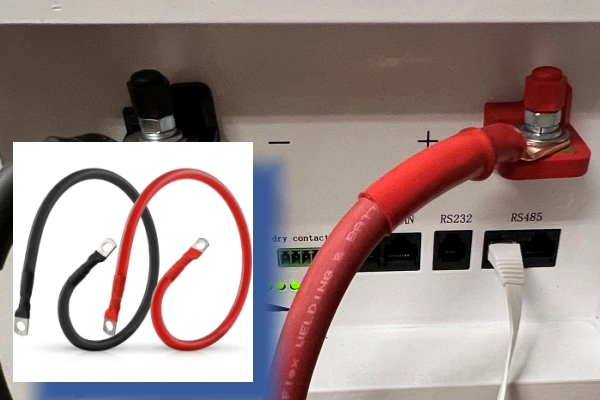
Battery Cable (Battery to Inverter)
Larger gauge (25–95 mm²) tinned copper cable with ring terminals, connecting battery banks to inverters and charge controllers in off-grid or storage systems. Not the same as PV string cable.
Solar Cable Specification & Size
Solar Cable Ampacity (1500 V DC, free air, 30 °C ambient)
mm² | AWG | Conductor Dia. (mm) | Max Current (A) | Typical Use |
|---|---|---|---|---|
1.5 | 16 | 1.38 | 30 | Small strings, short runs |
2.5 | 14 | 1.63 | 41 | Residential string wiring |
4 | 12 | 2.05 | 55 | Standard for most residential PV |
6 | 10 | 2.59 | 70 | Longer runs, larger systems |
10 | 8 | 3.26 | 98 | Commercial main DC cables |
H1Z2Z2-K vs PV1-F
Parameter | H1Z2Z2-K | PV1-F |
|---|---|---|
Voltage | 1000 / 1500 V DC | 1000 / 1500 V DC |
Insulation | XLPO (cross-linked polyolefin) | XLPO (cross-linked polyolefin) |
Conductor | Tinned copper, Class 5 | Tinned copper, Class 5 |
Standard | IEC 62930 / EN 50618 | IEC 62930 / EN 50618 |
Flame retardant | IEC 60332-1 | IEC 60332-1 |
Naming region | European designation (TÜV) | International designation |
Why Our Solar Cable Lasts 25+ Years Outdoors
Tinned Copper Conductor (Not Bare Copper)
XLPO Insulation (Not PVC)
Full Quality Testing
Solar Cable Projects & Supply Capability
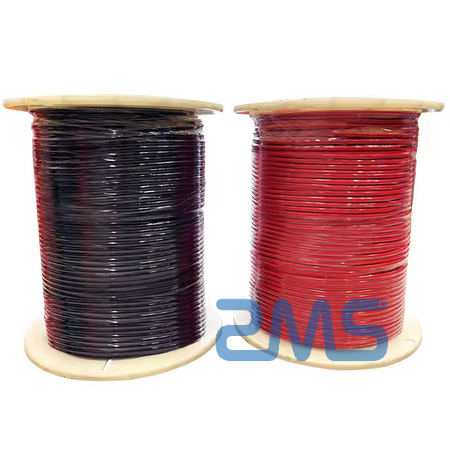
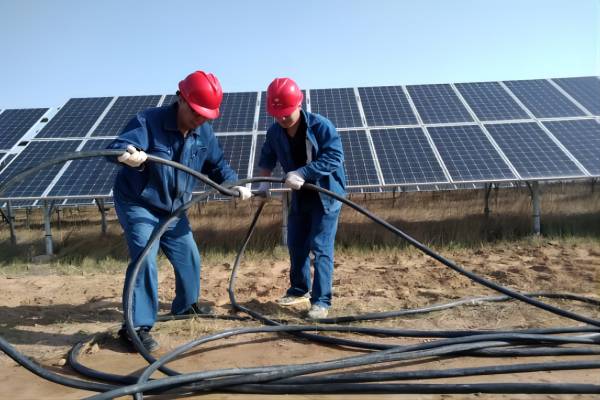
- Ground-mount solar farms — 6 mm² and 10 mm² H1Z2Z2-K string cable, red/black, supplied on wooden reels with MC4 connectors pre-installed
- Rooftop commercial installations — 4 mm² and 6 mm² PV1-F cable, 500 m rolls, UL/TÜV certified
- Battery storage systems — 25–95 mm² flexible battery cable with ring terminals, for inverter-to-bank connections
- Floating PV plants — UV-resistant XLPO cable with double sheath, suitable for humid coastal environments
Solar Cable Technical Performance Requirement
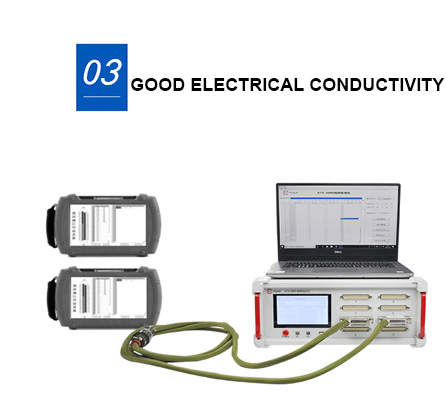
- Insulation resistance conductor resistance ρ≤4.95 Ω/km at 20 ℃. sheath surface resistance ρ≥ 109Ω.cm.
- Pressure test water temperature 20 ± 5 ℃, immersion length 10M, time 1H, AC frequency voltage 8000V, maintain 5min without breakdown.
- Combustion test vertical combustion test: the distance between the upper fixed point and the beginning of carbonization ≥ 50 mm. combustion downward extension of the distance to the upper fixed point ≤ 540 mm. combustion gas corrosion test: PH value ≥ 4.3, conductivity ≤ 10μ S / mm.
- Inner layer insulation mechanical properties before the aging tensile test: tensile strength ≥ 5N/mm2, elongation at break ≥ 200%. After aging (135±2℃), tensile strength change ≤±30%, elongation at break change ≤±30%. Air bomb aging tensile test: air pressure 5.5bar (127 ℃) tensile strength change ≤ + 30%, elongation at break change ≤ + 30%. Thermal elongation test: oven temperature 250 ± 3 ℃, mechanical pressure 20N/cm2 elongation under load ≤ 100%, elongation after unloading ≤ 25%.
- Mechanical properties of the sheath before aging tensile: tensile strength ≥ 10.0N/mm2. Elongation at break ≥ 300%. After aging (85 ± 2 ℃): elongation at break ≥ 250%. Change in tensile strength ≤ ± -15%. Elongation at break change ≤ -25%.
- Weather resistance test Low-temperature bending test of sheath: -40±2℃ in the freezer, 16 hours, no cracks can be seen by visual inspection after the test. Inner layer insulation and sheath ozone resistance: ozone concentration 250-300pphm, 24h, no cracking in 180o bending part after visual inspection. Sheath weather resistance cycle: sprinkling 18min, xenon lamp drying 102min test temperature 45±5°C. Total test time of at least 500h immediately followed by 7.1 bending test at room temperature, no cracks.
- No. 2 oil (ISO1817 ) test after oil immersion compressive strength retention ≥ 60%. Oil immersion after tensile elongation retention ≥ 70%. Diameter change after oil immersion ≤ 160.
Selection of Solar PV Cable
The cables used in the low-voltage DC transmission part of the solar photovoltaic power generation system have different connection requirements for different components due to different use environments and technical requirements.
As a professional solar cable supplier, ZMS Cable believes that the overall factors to consider when selecting suitable photovoltaic cables include the cable’s insulation performance, heat and flame retardant properties, aging resistance, and wire diameter specifications.
Specific Requirements are as Follows
1. Solar modules and components between the connection cable, generally use the connection cable attached to the module junction box directly connected, the length is not enough to use a special extension cable.
Depending on the size of the module power, this type of connection cable has a cross-sectional area of 2.5 mm, 4mm, 6mm, and three other specifications.
This type of connection cable uses a double layer of insulation sheath, which has superior resistance to UV, water, ozone, acid, and salt erosion, superior all-weather capability, and wear resistance.
2. The connection cable between the battery and the inverter requires the use of UL-tested multi-strand flexible wire, connected as close as possible. Choosing short and thick cables can reduce the loss of the system, and improve efficiency and reliability.
3. The connection cable between the battery array and controller or DC junction box is also required to use UL-tested multi-stranded flexible wire with a cross-sectional area according to the maximum output current of the array.
The DC cable cross-sectional area of the named parts is determined based on the following principles.
Solar cell modules and components between the connection cable, battery, and battery connection cable, AC load connection cable, generally select a cable rated current for each cable, in the maximum continuous operating current of 1.25 times.
Connection cables between solar cell arrays and arrays, connection cables between batteries (groups), and inverters are generally selected with a cable current rating of 1.5 times the maximum continuous operating current in each cable.
The above is the recommendation of ZMS cable team personnel. If there is anything else you do not understand, you can always contact the ZMS team. We will be happy to serve you.
Solar Cable FAQ
1. What size solar cable do I need for my PV system?
For most solar PV installations, 4mm² solar cable is the standard choice due to its balance of current capacity and cost efficiency. 6mm² or 10mm² solar cables are commonly used for larger systems, longer cable runs, or projects where minimizing voltage loss is important.
The ideal cable size should be selected based on PV system capacity, operating current, installation distance, and environmental conditions. Contact our cable specialists for a customized solar cable solution for your project.
2. What voltage are solar cables rated for?
Standard solar cables are typically rated up to 1500V DC and are widely used in photovoltaic (PV) systems for connecting solar modules, inverters, and electrical equipment. The 1500V DC rating supports higher system efficiency and is commonly applied in residential, commercial, and large-scale solar projects.
3. What standard applies to solar cables?
Solar cables are generally required to comply with international standards such as IEC 62930, EN 50618, and TÜV certifications. These standards ensure the cable meets requirements for safety, durability, UV resistance, and long-term outdoor performance in photovoltaic (PV) installations.
4. Can I use normal cable for solar?
No, it is not recommended. Standard electrical cables are not designed for the demanding conditions of solar PV installations. They typically lack the UV resistance, high-temperature resistance, ozone resistance, and weather resistance required for long-term outdoor use.
Solar cables are specifically engineered for DC photovoltaic systems and are manufactured with durable insulation materials to withstand prolonged exposure to sunlight, moisture, and harsh environmental conditions. Using standard cables may reduce system reliability, shorten service life, and create potential safety risks.
For safe and reliable operation, always use solar cables compliant with IEC 62930 or EN 50618 that are rated for your PV system.