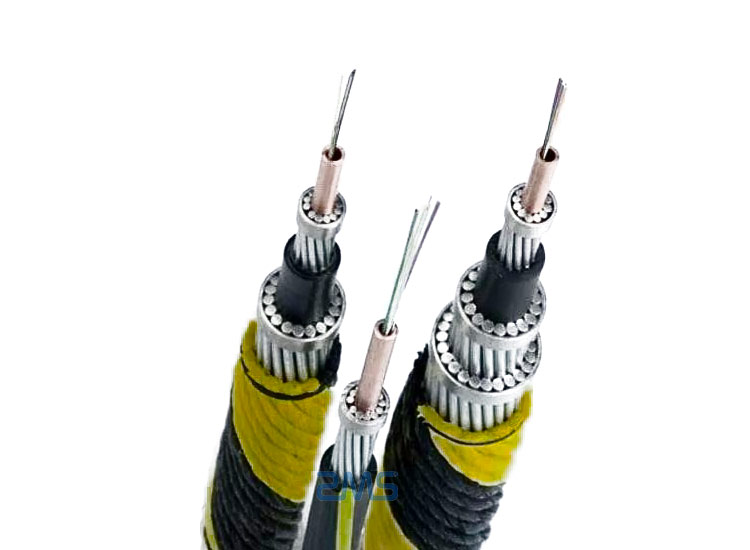
Fiber Optic Cables for Power Lines — ADSS, OPGW, OPPC Manufacturer
All-Dielectric and Optical Ground Wire Cables for Power Grid Communication, Plus Underground, Submarine and FTTH Fiber Cables
IEC 60794 · IEEE 1138 · ITU-T G.652/655/657 | ADSS Span up to 1,000m | OPGW for 110kV – 550kV Transmission Lines | 2 – 144 Core Configurations | Exported to 138 Countries | Quote & Datasheet Response
ZMS FIBER OPTIC CABLE PDF
ZMS provides our partners around the world with brochures of our cable products, including aerial cables, submarine cables, control cables and other types of special cables, and more.
Our Fiber Optic Cable Products
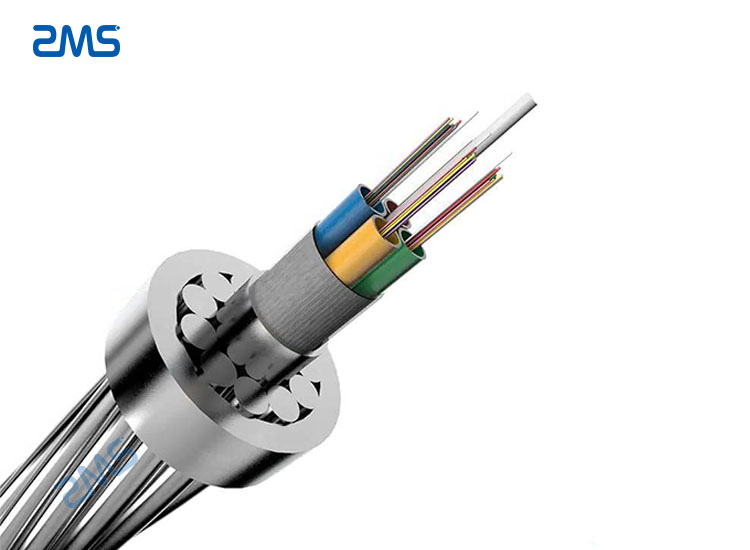
OPGW — Optical Ground Wire
- Dual function: lightning protection + fiber communication
- Stainless steel tube fiber unit, 2–48+ fibers
- Aluminum-clad steel wires for high short-circuit current capacity
- Tested to IEC 60794-4, IEEE 1138
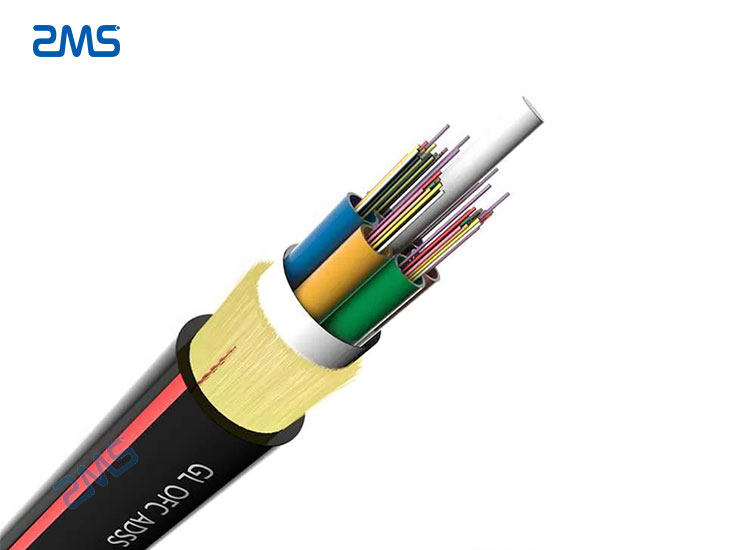
ADSS — All-Dielectric Self-Supporting Cable
- Aramid yarn strength member, span up to 1,000 m
- PE sheath (standard) or AT sheath (anti-tracking, for high-voltage fields)
- 2–144 fibers, ITU-T G.652D
- Tested to IEC 60794-4, IEEE 1138
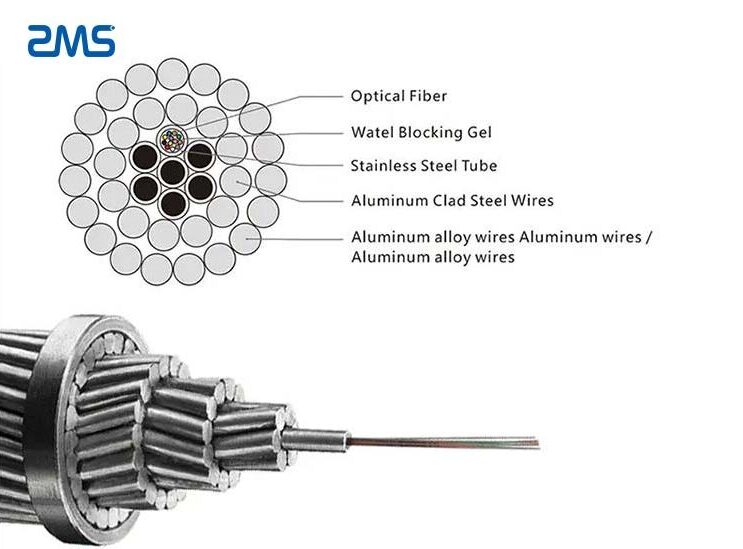
OPPC — Optical Phase Conductor
- One cable does both jobs — no separate ground wire or comms cable
- Stainless steel tube, fiber-filled gel for water blocking
- Custom fiber count per project
- Tested to IEC 60794-4, ITU-T G.652D
ADSS vs OPGW – Which Fiber Cable is Right for Your Power Line?
ADSS and OPGW are the two most common fiber optic cable types for power transmission lines. The right choice depends on whether you are retrofitting an existing line or building new infrastructure, and your project’s electrical and mechanical requirements.
Comparison Items | ADSS | OPGW |
Material Composition | All-dielectric (aramid yarn strength components, no metal, without conductive metal layer) | Metal-clad structure (stainless steel tube or aluminum tube + aluminum-clad steel stranded wire) |
Installation Location | Suspended on the side of the tower, installed independently | Replace the original ground wire and install it at the top of the tower. |
Dual Function | Communication function only | Dual function of grounding and communication (eliminating the need for a dedicated ground wire) |
Operating Temperature Range | −40°C to 70°C | -40°C to 85°C (wider tolerance range) |
Electrical Conductivity | Non-conductive (no risk of electrolytic corrosion, but no lightning protection) | Conductive, providing lightning protection |
Typical Span | 100m–1,000m | The span is consistent with that of the line towers, with no additional span restrictions. |
Most Suitable Scenarios | Upgrade projects to add communication functions to existing power lines, and low-voltage power distribution lines | New transmission lines (which can simultaneously replace ground wires), and main lines of 110kV and above. |
Installation Complexity | Low cost, independent construction, and no impact on existing line structure. | It needs to be coordinated with the circuit design and is usually installed during the construction or major overhaul of the circuit. |
Typical Application Voltage | Applicable to all voltage levels, commonly used in renovation projects. | 110kV, 220kV, and 550kV high-voltage transmission lines |
Recommended Choice | Upgrading of mountain lines with large spans and existing lines where power outages are inconvenient for construction. | New substation transmission lines that require lightning protection |
Fiber Optic Cable Applications
Advanced Production Equipment and Process

- Aramid yarn stranding machine (ADSS)
- Continuous stainless steel tube welding & filling line (OPGW)
- Double-sheath extrusion line (PE / AT)
- OTDR testing, dispersion & strain measurement
- Online tension and diameter monitoring
Fiber Optic Cable Accessories & Fittings
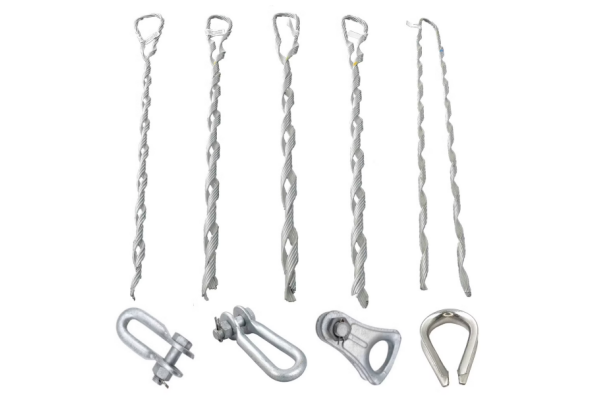
- Preformed suspension clamps and dead-end sets
- Vibration dampers (spiral type)
- Joint closures (splice boxes) for 2–144 fibers
- Downlead clamps and tower mounting brackets
FAQ – Fiber Optic Cable for Power Lines
ADSS (All-Dielectric Self-Supporting) cable contains no metallic components, making it immune to electrical corrosion in high-voltage fields, and is installed independently on the side of transmission towers without replacing existing infrastructure. OPGW (Optical Ground Wire) cable contains a metallic core that conducts electricity, allowing it to replace the conventional ground wire on a transmission tower while also carrying fiber optic communication — providing both lightning protection and communication in a single cable. ADSS is generally the better choice for retrofitting existing lines without interrupting operation, while OPGW is more economical for new transmission line construction since it combines two functions (grounding and communication) into one installation. OPGW also has a wider operating temperature range (−40°C to 85°C versus −40°C to 70°C for ADSS), making it more suitable for extreme climate conditions.
OPPC (Optical Phase Conductor) cable combines power transmission and fiber optic communication by replacing one of the phase conductors on a power line, rather than the ground wire (as with OPGW) or being installed separately (as with ADSS). OPPC is mainly used for voltage levels below 110kV in suburban distribution networks and rural power grids, where it avoids frequency interference and electromagnetic compatibility issues, and eliminates the need for a separate ground wire installation. OPPC is a good choice for rural electrification projects in Africa, Latin America, and Southeast Asia where combining power distribution and communication infrastructure in a single project reduces overall costs.
Yes. OPGW is the preferred fiber optic solution for new transmission line construction because it combines the lightning protection ground wire function with fiber optic communication in a single installation, avoiding the cost of a separate ground wire and communication cable. ZMS supplies OPGW cables for 110kV, 220kV, and 550kV new-build transmission line projects, with aluminium tube, aluminium frame, or stainless steel tube core structures depending on the required short-circuit current capacity and lightning protection performance. Core counts from 2 to 48+ fibers are available, with custom configurations for specific project communication requirements. Contact us with your line voltage, span length, and short-circuit current rating for a technical recommendation and quotation.
Standard ADSS cable spans range from 100m to 1,000m, with the maximum achievable span depending primarily on the outer sheath material, conductor sag requirements, and local wind and ice loading conditions. PE (polyethylene) sheathed ADSS is suitable for standard spans up to approximately 500–700m in moderate climate conditions. AT (anti-tracking) sheathed ADSS, which provides resistance to electrical tracking and erosion in high-voltage electric fields, is recommended for longer spans and installations near high-voltage conductors, and can achieve spans up to 1,000m or more with appropriate strength member design. Areas with high wind loads or significant ice accumulation will require shorter spans or higher-strength cable construction. Contact us with your span length, voltage level, and local climate data for a specific cable recommendation.