ACSR Conductor Cable
High-Tensile Overhead Conductors for Transmission Lines | ASTM B232 · IEC 61089 · BS 215 | Aluminium Conductor Steel Reinforced
Size Range: 16mm² – 1,250mm² | ACSR/AW Anti-Corrosion Type Available | Custom Stranding & Drum Length Available
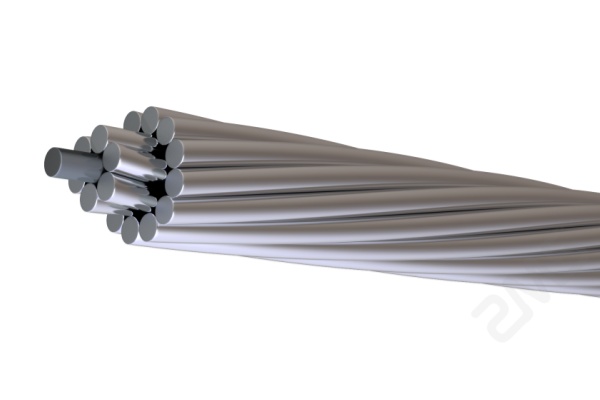
ACSR Conductor, full form Aluminium Conductor Steel Reinforced, is one of the most widely used overhead transmission lines, composed of a steel core and concentrically stranded aluminum wire. It has high tensile strength, high transmission efficiency, light weight, and reliability, making it an ideal choice for long-distance high-voltage transmission projects.
ACSR Conductor Specifications & Technical Data
Cross-Sectional Area (mm²) | Hinged Structure Al/St | Outer Diameter (mm) | Unit Weight (kg/km) | Maximum Tension (kN) | DC Resistance 20°C (Ω/km) | Applicable Standards |
16/2.7 | 6/1 | 6.30 | 74 | 9.0 | 1.8030 | IEC 61089 / BS 215 |
25/4.2 | 6/1 | 7.86 | 115 | 13.7 | 1.1520 | IEC 61089 / BS 215 |
35/6 | 6/1 | 9.33 | 161 | 19.5 | 0.8225 | IEC 61089 / ASTM B232 |
50/8 | 6/1 | 11.13 | 230 | 26.6 | 0.5765 | IEC 61089 / ASTM B232 |
70/11 | 6/1 | 13.11 | 322 | 37.2 | 0.4132 | IEC 61089 / BS 215 |
95/15 | 6/1 | 15.31 | 437 | 49.4 | 0.3047 | IEC 61089 / ASTM B232 |
120/19 | 26/7 | 16.46 | 547 | 66.4 | 0.2411 | IEC 61089 / BS 215 |
150/24 | 26/7 | 18.10 | 682 | 79.7 | 0.1940 | IEC 61089 / ASTM B232 |
185/30 | 26/7 | 20.16 | 841 | 96.7 | 0.1571 | IEC 61089 / BS 215 |
240/40 | 26/7 | 22.95 | 1,092 | 120.3 | 0.1213 | IEC 61089 / ASTM B232 |
300/50 | 26/7 | 25.25 | 1,367 | 150.1 | 0.0965 | IEC 61089 / BS 215 |
400/64 | 54/7 | 28.58 | 1,776 | 183.1 | 0.0723 | IEC 61089 / ASTM B232 |
500/64 | 54/7 | 31.91 | 2,084 | 212.9 | 0.0579 | IEC 61089 |
630/80 | 54/19 | 35.78 | 2,616 | 261.4 | 0.0459 | IEC 61089 |
Note: The above data are standard reference values. Actual parameters are subject to the ZMS factory inspection report. Please contact the technical team for special specifications.
ACSR Code Name Reference – North American Designations
Code Name | Cross-Sectional Area (kcmil) | Conversion (mm²约) | Hinged Structure Al/St | Application Voltage | Common Markets |
Raven | 201.6 | ~102 | 6/1 | 33kV–66kV | North America, Middle East |
Quail | 242.8 | ~123 | 6/1 | 33kV–66kV | North America |
Pigeon | 303.0 | ~154 | 6/1 | 66kV–110kV | North America, Middle East |
Penguin | 370.0 | ~188 | 6/1 | 66kV–110kV | North America |
Partridge | 266.8 | ~135 | 26/7 | 66kV–110kV | North America, Middle East |
Linnet | 336.4 | ~170 | 26/7 | 110kV | North America |
Hawk | 477.0 | ~242 | 26/7 | 110kV–220kV | North America, the Middle East, and South America |
Hen | 477.0 | ~242 | 26/7 | 110kV–220kV | North America |
Osprey | 556.5 | ~282 | 26/7 | 220kV | North America |
Drake | 795.0 | ~403 | 26/7 | 220kV–500kV | North America and the Middle East (mainstream specifications) |
Cardinal | 954.0 | ~483 | 54/7 | 220kV–500kV | North America, Middle East |
Bluejay | 1,033.5 | ~524 | 45/7 | 500kV | North America |
Rail | 954.0 | ~483 | 45/7 | 500kV | North America |
Pheasant | 1,272.0 | ~644 | 54/19 | 500kV+ | North America, large-scale power transmission projects |
ACSR Conductor Types
Choose the Right Core for Your Overhead Project
Standard ACSR Conductor - Standard Type
Steel Core Type | Applicable Environment | Core Advantages | Main standards |
Hot-dip galvanized steel core | Inland areas, arid climates, and general power transmission lines | Lowest cost, fastest delivery, and most widely used model | ASTM B232 / IEC 61089 / BS 215 |
ACSR/AW Aluminium-Clad Steel Core - Corrosion-Resistant
Steel Core Type | Applicable Environment | Core Advantages | Main standards |
Aluminium-Clad Steel | Coastal areas, high-salt-fog environments in the Middle East, and maritime climates | Corrosion resistance is 5–10 times higher than standard galvanized cores, requiring no additional anti-corrosion treatment and resulting in a significantly longer service life. | IEC 61089 / ASTM B232 / BS 215 |
ACSR/AS – High-Strength Steel
Steel Core Type | Applicable Environment | Core Advantages | Main standards |
Ultra-high strength steel core | Long-span route, valley and river crossings, heavy ice areas | The maximum permissible tensile force is increased by 30-50% compared to the standard model, making it suitable for ultra-long spans (over 1,000m). | IEC 61089 / ASTM B232 |
ACSR/AW Conductor for Middle East & Coastal Projects
ZMS ACSR/AW conductors feature an aluminium-clad steel core with a minimum aluminium coverage of 10% by cross-section area. The aluminium cladding provides a natural barrier against salt spray, humidity, and industrial pollution, making it the preferred choice for transmission projects in the GCC region, North Africa, and coastal Southeast Asia.
Compliant with IEC 61089 and ASTM B232. Full corrosion test reports available upon request. Sizes from 50/8mm² to 630/45mm².
Our Key Structural Features
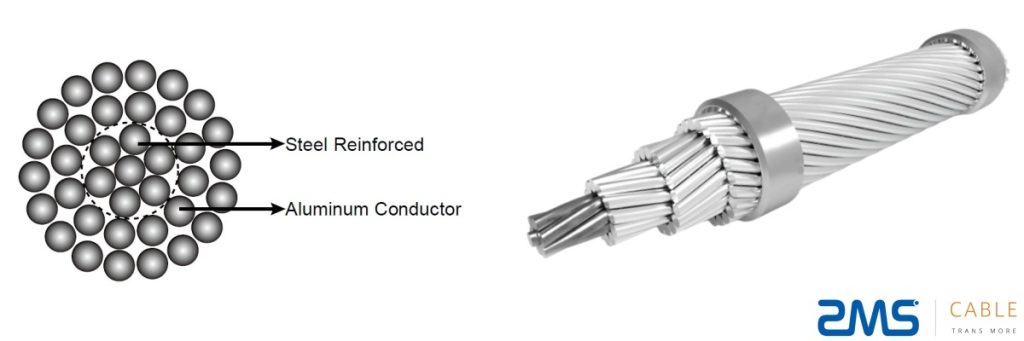
- Core: galvanized steel wire or stranded wire (can be single or multiple strands)
- Shell: 1350-H19 hard drawn aluminum wire
- Stranded Wire: concentric stranded wire (usually 6 strands of aluminum wire wrapped around 1 strand of steel wire, or multiple layers)
- Optional Core Types: galvanized, aluminum clad steel (for improved corrosion resistance)
- High tensile strength for long-span and heavy-load applications
- Good conductivity due to aluminum outer layers
- Galvanized steel core ensures durability and sag resistance
- Lightweight, easy to install and maintain
- Custom sizes and stranding configurations available
- Complies with ASTM B232, IEC 61089, BS 215 standards
- Compared to AAC and AAAC, ACSR wire has better sag control under high temperature or mechanical stress.
ACSR Conductor Applications
ACSR stranded conductors are widely used in long-distance overhead transmission and distribution networks due to their unique high tensile strength and reliable conductivity.
Long-Distance HV Transmission Lines
ACSR conductors are the global standard for high-voltage overhead transmission lines at 110kV, 220kV, and 500kV. Their high tensile strength allows longer spans between towers, reducing civil construction costs. ZMS has supplied ACSR conductors for 110kV and 500kV projects across the Middle East, Southeast Asia, and Africa.
Large Span River & Mountain Crossings
For transmission lines crossing rivers, valleys, and mountain ridges, ACSR’s steel-reinforced core provides the tensile strength needed to maintain safe sag levels over spans exceeding 1,000 metres. ACSR/AS (high-strength core) type is recommended for spans over 800m.
Middle East & Coastal Environments
In GCC countries and coastal regions where salt spray and humidity cause accelerated corrosion, ZMS ACSR/AW (aluminium-clad steel core) conductors provide superior corrosion resistance. ACSR/AW has been successfully used in Saudi Arabia, UAE, Qatar, and North African coastal transmission projects.
Grid Rehabilitation & Reconductoring
ACSR conductors are widely used in rural and urban grid rehabilitation projects due to their compatibility with existing tower hardware and easy installation. For projects requiring higher capacity on existing structures, ACSR/AW or HTLS conductors are recommended alternatives.
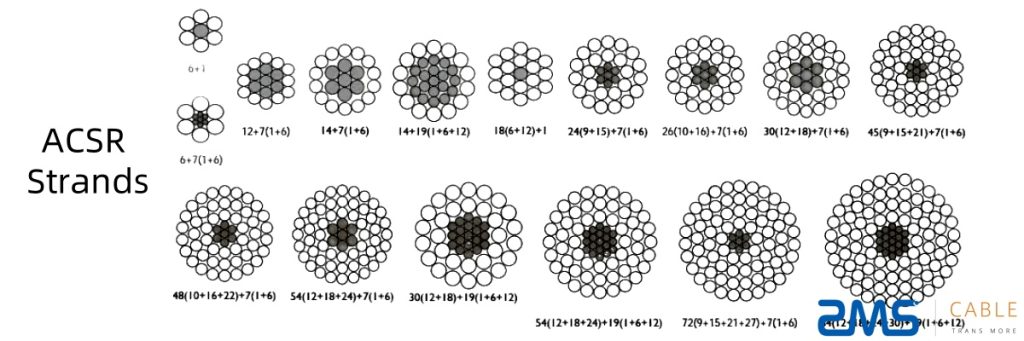
About the Strands of ACSR Conductors
The “strand count” structure is one of the core structural features of bare conductor ACSR, which refers to the total number of aluminum wires and steel core wires in the conductor. This number greatly affects the performance and size of ACSR conductors.
The details are as follows:
| Conductor Name | Stranding (Al/St) | Total Wires | Al Cross Section (mm²) | Steel Cross Section (mm²) | Typical Applications |
|---|---|---|---|---|---|
| ACSR 6/1 | 6 Al / 1 St | 7 | Small sizes (e.g., 25 mm²) | Medium mechanical strength | Short-span, light load |
| ACSR 12/7 | 12 Al / 7 St | 19 | ~80–100 mm² | High strength core | Industrial feeders, tight corridors |
| ACSR 18/1 | 18 Al / 1 St | 19 | ~120 mm² | Lightweight core | Short- to mid-span lines |
| ACSR 26/7 | 26 Al / 7 St | 33 | ~185–250 mm² | Standard strength | Common for HV lines, e.g., Drake |
| ACSR 30/7 | 30 Al / 7 St | 37 | ~300 mm² | Enhanced tensile strength | Rural and intercity lines |
| ACSR 54/7 | 54 Al / 7 St | 61 | ~400–500 mm² | Very high capacity | Long-span or mountainous areas |
| ACSR 72/7 | 72 Al / 7 St | 79 | ~630 mm² | Large conductor with stability | 220–500kV transmission lines |
| ACSR 84/19 | 84 Al / 19 St | 103 | ~700–800 mm² | Extra-high strength | Harsh environment, extra long spans |
| ACSR 112/20 | 112 Al / 20 St | 132 | >1000 mm² | Ultra strength & capacity | Cross-border, ultra HVDC lines |
Note: The number of cable strands is one of the basic design parameters, but it has a direct impact on the selection, current carrying capacity, tensile strength, etc. The appropriate number of strands must be carefully selected.
ACSR Conductor Standard
- ASTM B232 – Stranded Conductors of Aluminum and Steel
- IEC 61089 – Round wire concentric lay overhead electrical conductors
- BS 215 Part 2 – Aluminum conductors, steel-reinforced
- ISO 9001, CE, TUV and other certifications available