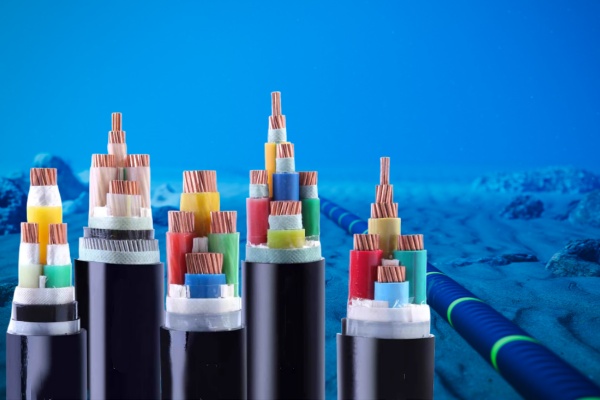
0.6/1kV Cable

low voltage cable
Our 0.6/1kV power cables are designed for main and sub-distribution networks in industrial plants, commercial buildings, and infrastructure projects. They are available in copper or aluminium conductor, XLPE or PVC insulation, with optional steel wire (SWA) or steel tape (STA) armouring for direct burial or mechanical protection.
Standard types include YJV / YJLV (XLPE insulated, PVC sheathed), VV / VLV (PVC insulated and sheathed), and armoured variants YJV22 / VV22. Manufactured to IEC 60502-1 and BS 5467. Sizes from 1.5 mm² to 630 mm², 1 to 5 cores.

What Is a 0.6/1kV Cable?

A 0.6/1kV cable is a low-voltage power cable used for transmission and distribution in industrial, commercial, and building installations. The rating Uo/U = 0.6/1 kV means 0.6 kV between conductor and earth, and 1 kV between conductors.
Manufactured to IEC 60502-1, BS 5467, VDE 0276-603, and AS/NZS 5000.1. Suitable for indoor, outdoor, and direct burial installation. Low-voltage cables end at 1 kV; medium-voltage starts at 3.6/6 kV and above.
600v 1000v cable and wire

Different 0.6/1kV Cable Models

600v 1000v PVC Insulated Cable

0.6/1kV PVC Insulated Power Cable — VV / VLV

Conductor: Copper (VV) or aluminium (VLV), Class 1 solid (≤10 mm²) or Class 2 stranded (≥16 mm²).
Insulation: PVC (Polyvinyl Chloride), 70 °C rated.
Inner sheath / bedding: PVC (multi-core only).
Armour: None (unarmoured). Optional SWA on request — see Card 3.
Outer sheath: PVC, black or grey.
Max operating temperature: 70 °C.
Short-circuit temperature: Up to 160 °C (max 5 s).
Voltage rating: 0.6/1 kV (Uo/U).
Core count: 1, 2, 3, 3+1, 3+2, 4, 5 cores.
Cross-section range: 1.5 mm² – 630 mm².
Key Features: Cost-effective, good mechanical strength, moisture and chemical resistance. Suitable for fixed indoor wiring and light-duty distribution.
Standards: IEC 60502-1, BS 5467, VDE 0276-603, GB/T 12706.
0.6kV 1kV XLPE Insulated Cable

0.6/1kV XLPE Insulated Power Cable — YJV / YJLV

0.6/1kV XLPE Insulated Power Cable — YJV / YJLV
Conductor: Copper (YJV) or aluminium (YJLV), Class 1/2 solid or stranded.
Insulation: XLPE (Cross-linked Polyethylene), 90 °C rated.
Inner sheath / bedding: PVC or LSZH (low-smoke zero-halogen).
Armour: None (unarmoured). Optional SWA/STA — see Card 3.
Outer sheath: PVC, black; or LSZH for public buildings and tunnels.
Max operating temperature: 90 °C.
Short-circuit temperature: Up to 250 °C (max 5 s).
Voltage rating: 0.6/1 kV (Uo/U).
Core count: 1, 2, 3, 3+1, 3+2, 4, 5 cores.
Cross-section range: 1.5 mm² – 630 mm².
Key Features: Higher current capacity than PVC (up to ~1.5×), excellent thermal and aging resistance, long service life. Preferred for main distribution and high-load circuits.
Standards: IEC 60502-1, BS 5467, VDE 0276-603, AS/NZS 5000.1, GB/T 12706.
Armoured 0.6 1kV Cable (SWA STA AWA)

0.6/1kV Armoured Power Cable — YJV22 / VV22 / YJLV22

0.6/1kV Armoured Power Cable — YJV22 / VV22 / YJLV22
Conductor: Copper or aluminium, Class 1/2 solid or stranded. Available in single-core and multi-core.
Insulation: XLPE (YJV22 / YJLV22, 90 °C) or PVC (VV22, 70 °C).
Inner sheath / bedding: PVC or LSZH, applied over the insulated cores.
Armour types:
  • SWA (Steel Wire Armour): for multi-core cables, direct burial, high mechanical protection.
  • STA (Steel Tape Armour): for multi-core where space is limited, impact resistance.
  • AWA (Aluminium Wire Armour): for single-core AC circuits only — non-magnetic, avoids eddy-current heating that steel armour would cause on single-core AC.
Outer sheath: PVC or LSZH, black.
Max operating temperature: 70 °C (PVC) / 90 °C (XLPE).
Short-circuit temperature: 160 °C (PVC) / 250 °C (XLPE).
Key Features: Mechanical protection against impact, crush, and rodent damage. Suitable for direct burial in trenches, cable ducts, and outdoor installations. Do not use SWA on single-core AC (magnetic loss and overheating).
Standards: IEC 60502-1, BS 5467, VDE 0276-603, GB/T 12706.
0.6V 1kV overhead Cable

0.6/1kV Aerial Bundled Cable (ABC)

Conductor: Aluminium alloy (AAAC-type) or hard-drawn aluminium, Class 2 stranded. Can include a bare neutral messenger or an insulated neutral.
Insulation / outer covering: XLPE (90 °C) or HDPE, extruded directly over each phase conductor. No separate inner sheath — the insulation serves as the outer jacket.
Armour: None (aerial installation).
Max operating temperature: 70 °C (PVC/HDPE) / 90 °C (XLPE).
Voltage rating: 0.6/1 kV, for low-voltage overhead distribution.
Configuration: 1 to 4 phases, plus optional neutral and service line.
Cross-section range: 16 mm² – 240 mm².
Key Features: Lightweight, weather and UV resistant, no cross-connections needed (insulated bundled design), reduces faults vs bare open-wire. For rural electrification, street lighting, and urban overhead networks.
Standards: IEC 60502-1, NFC 33-209 (French ABC standard), local utility specifications (e.g., ESQ/QEB, DEWA, SEC).

Not sure which cable fits your project? Our engineers can help.

How to Choose the Right 0.6/1kV Cable

When selecting a 0.6/1kV cable, consider the following five factors:
1. Application and Installation Environment
Determine whether the cable is for main power distribution, industrial equipment, or building wiring, and whether it will be installed indoors, outdoors, or directly underground. Direct burial requires armoured cable; indoor tray installation can use unarmoured.
2. Insulation Material
PVC-insulated cables (VV/VLV, 70 °C) suit standard fixed wiring and budget projects. XLPE-insulated cables (YJV/YJLV, 90 °C) are recommended for higher current capacity, longer runs, and continuous load — typically 1.3 to 1.5× the ampacity of PVC at the same cross-section.
3. Armour Requirement
Choose unarmoured cable for tray, conduit, and indoor installation. Choose armoured cable for direct burial, outdoor trenches, or areas with rodent or mechanical impact risk. SWA/STA are for multi-core cables. AWA (aluminium wire armour) is for single-core AC circuits only — steel armour would cause eddy-current heating on single-core AC.
4. Conductor Material
Copper conductors offer higher conductivity, smaller overall size, and easier terminations — preferred for equipment panels and indoor distribution. Aluminium conductors (YJLV/VLV) are lighter and more economical for long-distance underground runs and large cross-sections.
5. Sheath Type and Standards
For public buildings, tunnels, metro stations, and data centres, choose LSZH (low-smoke zero-halogen) sheath instead of standard PVC. Verify the cable meets the required standard: IEC 60502-1 (international), BS 5467 (UK), VDE 0276-603 (Germany), or AS/NZS 5000.1 (Australia/New Zealand).

0.6/1kV vs 450/750V vs 300/500V Cable

Parameter
0.6/1kV
450/750V
300/500V
Rated Voltage
(Uo/U)
0.6 / 1 kV
450 / 750 V
300 / 500 V
Voltage Class
 
Low Voltage
Low Voltage
Low Voltage
Typical Use
 
Main & sub-distribution
Fixed wiring, power to equipment
Control, signal, instrumentation
Installation
 
Fixed, indoor/outdoor/underground
Fixed / flexible
Flexible, panel wiring
Conductor Range
 
1.5 – 630 mm²
1.5 – 400 mm² (power); 0.75 – 6 mm² (flexible)
0.5 – 2.5 mm² (control); up to 35 mm² (power type)
Insulation
 
PVC / XLPE
PVC / XLPE / Rubber
PVC / Rubber
Max Temp
 
70°C (PVC) / 90°C (XLPE)
70°C / 90°C
70°C
Short-Circuit
 
160°C / 250°C
160°C / 250°C
160°C (PVC)
Armour
 
Yes: SWA / STA / AWA
No
No
Standards
 
IEC 60502-1, BS 5467
IEC 60227, IEC 60245
IEC 60227, VDE 0281


FAQ

Is 0.6/1kV cable suitable for underground use?

Yes, armoured 0.6/1kV cables (SWA, STA or AWA) are suitable for underground installations, while unarmoured cables require additional protection.

Can 0.6/1kV cables be used outdoors?

Yes, PVC or XLPE insulated armoured cables are suitable for outdoor installations, providing protection against weather, UV, and mechanical stress.

PVC or XLPE – which is better for 0.6/1kV cable?

PVC is cost-effective and suitable for standard installations, while XLPE offers higher temperature resistance, current capacity, and longer service life for heavy-duty or continuous operation.

ZMS Cable Service

High Voltage DC Cable

Product Selection Service

ZMS offers a comprehensive range of cable and conductor products. Our engineers help you select the right cable type, size and standard for your specific project requirements.
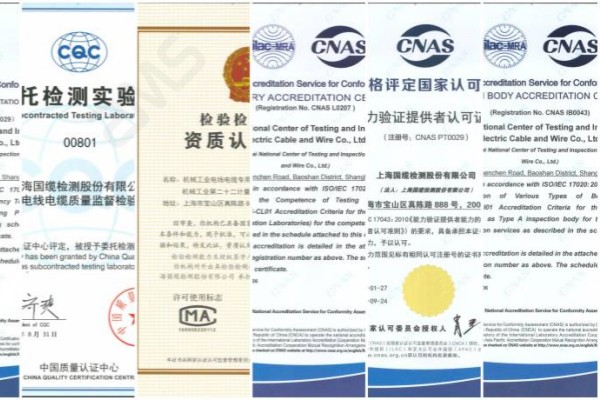
Professional certification quality assurance

Quality Certification Service

All ZMS cables are manufactured and tested according to GB, IEC, BS, NFC, ASTM and DIN standards. Full type-test reports and third-party inspection certificates are available on request.

ZMS cable factory

Professional Customer Service

Our technical team provides free consulting and one-stop project support, from cable selection and quotation to delivery tracking and after-sales service, with 24-hour response.

delivery and shipping service

Delivery and Shipping Service

We provide reliable worldwide shipping with secure packaging. Standard cables are ready within 7–15 days, with full container or LCL options to reduce your logistics costs.
cable levels

Packaging Service

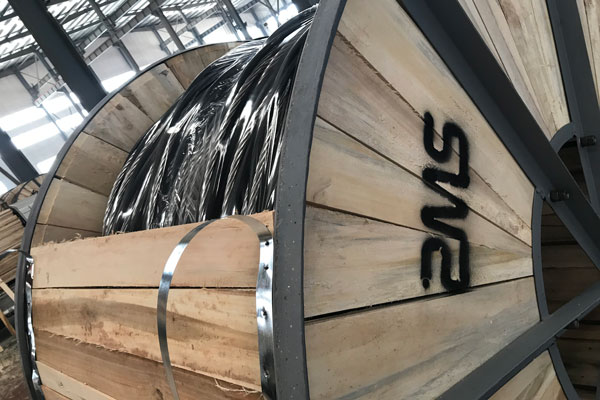
Cables are packed on wooden reels, corrugated boxes or coils. Cable ends are sealed with BOPP tape and non-hygroscopic caps. Custom shipping marks and labeling are available on request.