ABC Aerial Bundled Cable
LV & MV Overhead Insulated Cable for Transmission Lines, Distribution Networks and Rural Electrification
Voltage range 0.6/1kV–33kV | IEC 60502 / BS 7870 / NFC 33-209 / AS/NZS 3599 / DIN 48201 | Rural electrification projects in Africa and South America
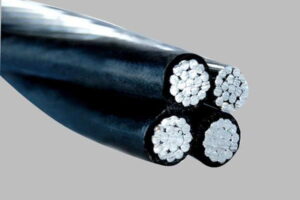
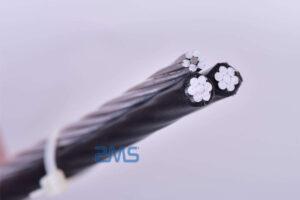
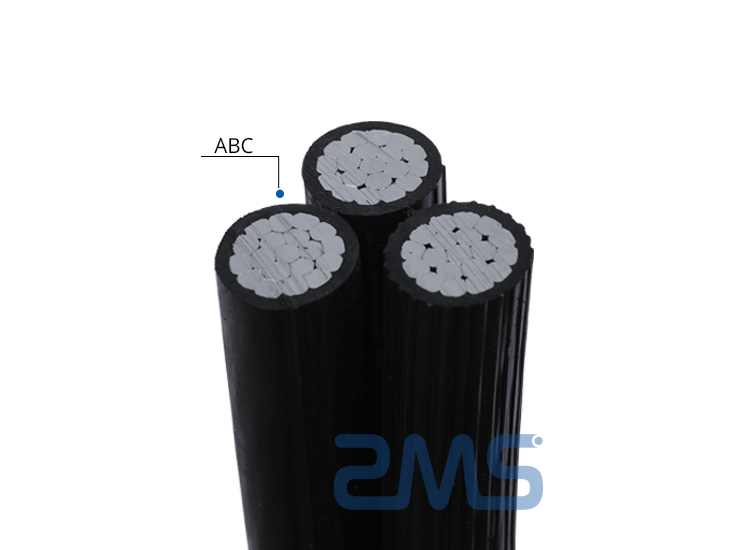
ABC Aerial Bundled Cable is characterized by excellent electrical performance, high short-circuit resistance, long service life, lightweight, easy installation, operation, and maintenance. It is widely used in most parts of the world. This type of overhead bundled cable differs from overhead bare conductor cables in that it consists of copper or aluminum neutral wires wrapped in insulation and tightly bundled together for low and medium voltage power transmission.
Bare cables are used for medium and high voltage power transmission.
ABC Cable Specification PDF
ZMS provides our partners around the world with brochures of our cable products, including aerial cables, submarine cables, control cables and other types of special cables, and more.
ABC Cable Construction & Specifications
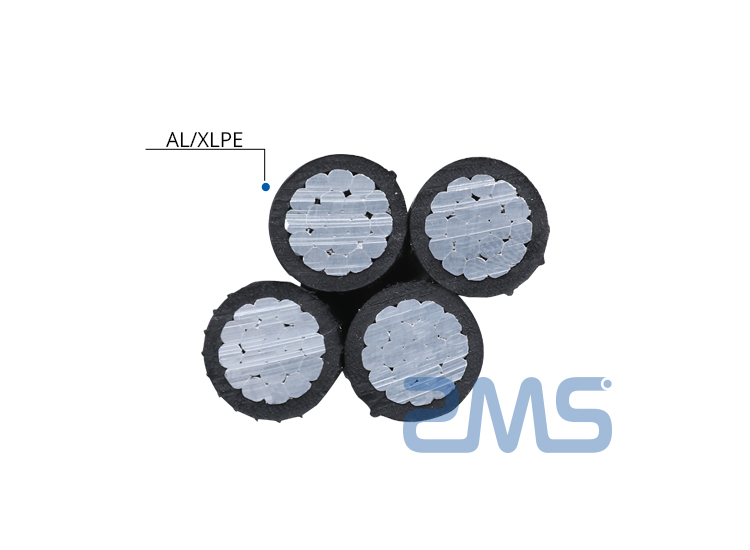
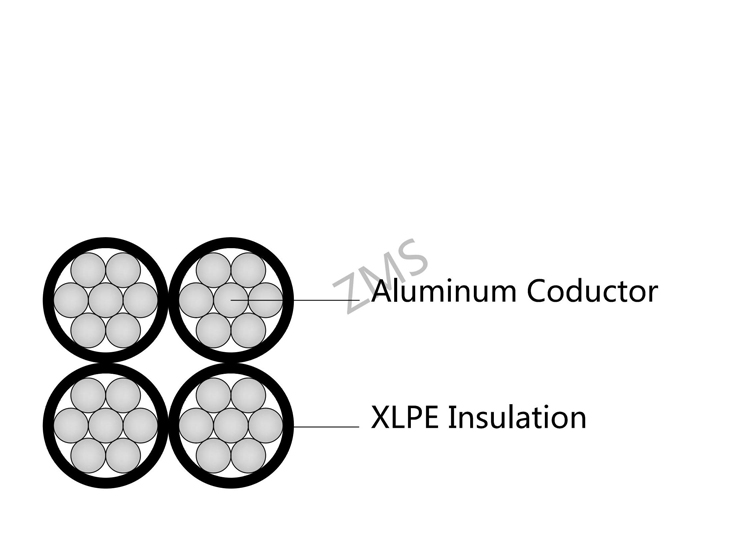
0.6/1kV Low Voltage ABC Cable
Low Voltage Aerial Bundled Cable (LV ABC) is designed for overhead power distribution systems up to 0.6/1kV. The cable consists of insulated aluminum phase conductors twisted around a neutral messenger conductor, providing enhanced safety and reliability compared with bare overhead lines. It is widely used in residential areas, urban distribution networks, rural electrification projects, and street lighting systems.
| Item | Specification |
|---|---|
| Voltage Rating | 0.6/1kV |
| Conductor | AAC / AAAC / ACSR |
| Insulation | PVC, HDPE, XLPE |
| Size Range | 16–240 mm² |
| Standards | IEC 61089, BS 7870, DIN 48201, ASTM B399, BS EN50183, NFC33-209 |
| Applications | Residential supply, rural electrification, street lighting, utility distribution |
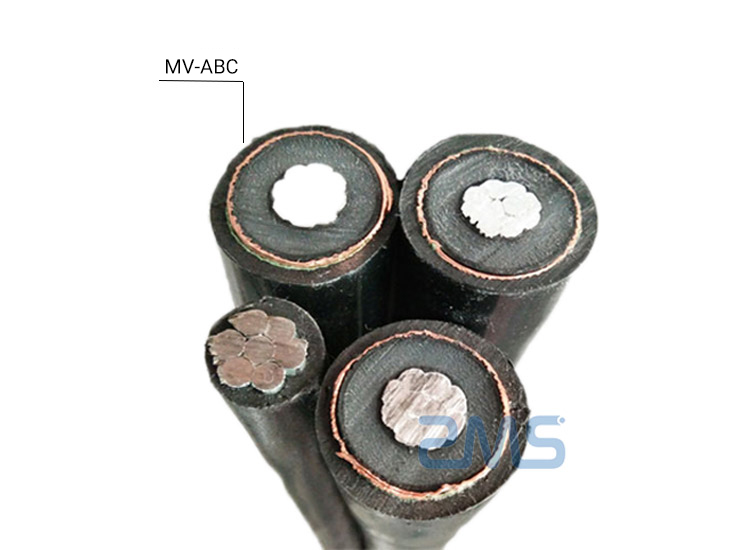
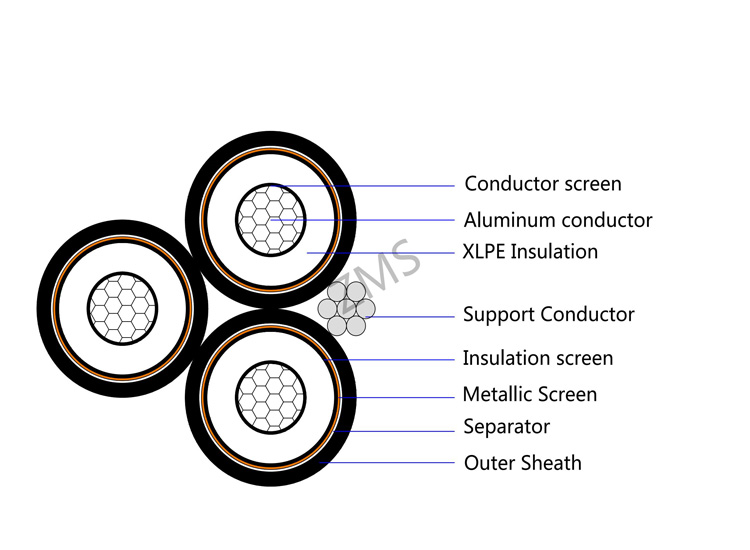
3.6/6kV–19/33kV Medium Voltage ABC Cable
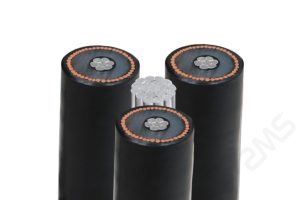
Medium Voltage Aerial Bundled Cable (MV ABC) is designed for overhead distribution networks operating from 3.6/6kV to 19/33kV. Featuring XLPE insulated aluminum conductors, MV ABC combines the advantages of overhead installation with the safety and reliability of insulated cable systems. It is particularly suitable for utility networks in forests, mountainous regions, industrial zones, and areas exposed to severe weather conditions.
| Item | Specification |
|---|---|
| Voltage Rating | 3.6/6kV – 19/33kV |
| Conductor | Compact Aluminum / AAAC |
| Insulation | XLPE |
| Size Range | 35–400 mm² |
| Standards | IEC 60502-2, NFC 33-226, HD 620, BS 7870 |
| Applications | Utility distribution, industrial plants, renewable energy projects, rural networks |
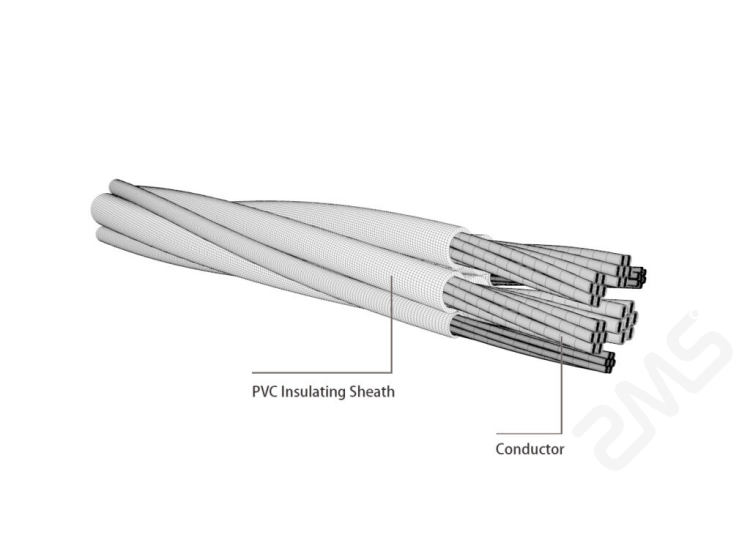
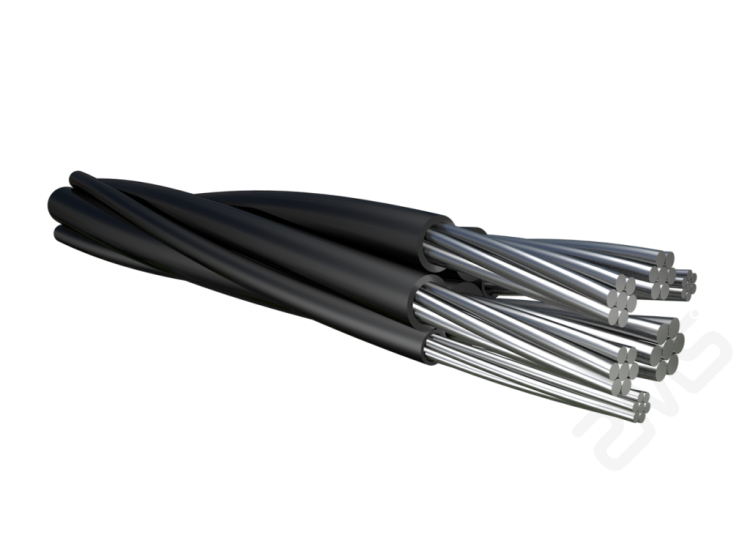
NFC 33-209 ABC Cable
NFC standards are widely adopted in many African and South American power distribution projects, especially for low-voltage and aerial bundled cable systems. The most commonly referenced standards are based on French norms (NF C series), which are widely accepted by utilities in Francophone Africa and Latin American infrastructure projects.
| Item | Specification |
|---|---|
| Standard | NFC 33-209 |
| Voltage | 0.6/1kV |
| Conductor | AAC / AAAC Aluminum |
| Neutral Messenger | AAAC / ACSR (load-bearing) |
| Insulation | XLPE / PE (UV resistant, black) |
| Core Configuration | 2 / 3 / 4 cores |
| Size Range | 2×16 to 4×120 mm² |
| Structure | Insulated phase conductors + neutral messenger, bundled |
| Installation Type | Overhead aerial distribution system |
| Applications | Urban & rural LV distribution, residential supply, street lighting, utility networks, temporary construction power |
Key Technical Advantages
- Insulated Conductors: Improved safety and reduced short circuit risk
- Bundled Structure: Space-saving and easy installation
- UV Resistant Insulation: Long service life in outdoor environments
- High Mechanical Strength: Suitable for harsh weather conditions
- Low Maintenance Requirement: Reduced operation cost
- Flexible Installation: Suitable for various distribution networks
Technical Parameters
LV ABC Cable (0.6/1kV) Common Specifications
| Configuration | Typical Conductor Sizes (mm²) |
|---|---|
| Duplex (1 Phase + Neutral) | 2×16, 2×25, 2×35, 2×50 |
| Triplex (2 Phase + Neutral) | 3×16, 3×25, 3×35, 3×50 |
| Quadruplex (3 Phase + Neutral) | 4×16, 4×25, 4×35, 4×50, 4×70, 4×95, 4×120 |
| Neutral Messenger | 16–120 mm² AAC, AAAC or ACSR |
Voltage Rating: 0.6/1kV
Conductor Material: AAC, AAAC, ACSR
Insulation: XLPE or PE
Applicable Standards: IEC 60502-1, NFC 33-209, BS 7870, SANS 1418
MV ABC Cable (6kV–33kV) Common Specifications
| Voltage Class | Common Conductor Sizes (mm²) |
|---|---|
| 6/10kV | 35, 50, 70, 95, 120, 150, 185, 240 |
| 8.7/15kV | 50, 70, 95, 120, 150, 185, 240 |
| 12/20kV | 70, 95, 120, 150, 185, 240, 300 |
| 18/30kV | 95, 120, 150, 185, 240, 300 |
| 19/33kV | 120, 150, 185, 240, 300, 400 |
Voltage Rating: 3.6/6kV to 19/33kV
Conductor Material: Compact Aluminum or AAAC
Insulation: XLPE
Typical Structure: Conductor + Conductor Screen + XLPE Insulation + Weather-Resistant Outer Layer
Applicable Standards: IEC 60502-2, NFC 33-226, HD 620, BS 7870
NFC Standard Specifications for Africa & South America
| Standard | Full Reference | Cable Type | Voltage Level | Application Scope |
|---|---|---|---|---|
| NFC 33-209 | Low Voltage Aerial Bundled Cables | LV ABC | 0.6/1kV | Overhead LV distribution, residential supply, rural electrification |
| NFC 33-226 | Covered Conductors for MV Networks | MV ABC / Covered Conductor | 6kV – 33kV | Medium voltage overhead lines in urban & rural grids |
| NFC 32-321 | Aluminum Conductors (AAC/AAAC) | Bare & phase conductors | LV & MV | Overhead line conductors for distribution networks |
| NFC 34-125 | Insulated overhead line accessories | Accessories | LV & MV | Fittings, clamps, spacers for aerial bundled systems |
Notes for Project Use
- NFC standards are commonly requested in Africa (West Africa, North Africa, Central Africa) and South America (especially French/Portuguese influenced EPC projects)
- NFC 33-209 is the most frequently specified standard for LV ABC cable tenders
- NFC 33-226 is widely used for MV covered conductor systems replacing bare overhead lines
- These standards are often accepted alongside IEC equivalents (IEC 60502 series)
Table 1 : Technology requirements of copper core ABC insulated cable
Nominal cross section area of conductor(mm²) | Single wire Min. No of conductor | Conductor O.D.(reference value)/mm | Nominal thickness of insulation(mm) | Cable Max. Average outer diameter(mm) | The Max. Resistance of conductor at 20°C(Ω/km) | The Min, resistance of insulation at rated temperature | Breaking load of single core | ||
|
|
|
|
| Hard copper | Soft copper | 70°C | 90°C | Hard copper |
10 | 6 | 3.8 | 1.0 | 6.5 | 1.906 | 1.83 | 0.0067 | 0.67 | 3471 |
16 | 6 | 4.8 | 1.2 | 8.0 | 1.198 | 1.15 | 0.0065 | 0.65 | 5486 |
25 | 6 | 6.0 | 1.2 | 9.4 | 0.749 | 0.727 | 0.0054 | 0.54 | 8465 |
35 | 6 | 7.0 | 1.4 | 11.0 | 0.540 | 0.524 | 0.0054 | 0.54 | 11731 |
50 | 6 | 8.4 | 1.4 | 12.3 | 0.399 | 0.387 | 0.0046 | 0.46 | 16502 |
70 | 12 | 10.0 | 1.4 | 14.1 | 0.276 | 0.268 | 0.0040 | 0.40 | 23461 |
95 | 15 | 11.6 | 1.6 | 16.5 | 0.199 | 0.193 | 0.0039 | 0.39 | 31759 |
120 | 18 | 13.0 | 1.6 | 18.1 | 0.158 | 0.153 | 0.0035 | 0.35 | 39911 |
150 | 18 | 14.6 | 1.8 | 20.2 | 0.128 | 0.124 | 0.0035 | 0.35 | 49505 |
185 | 30 | 16.2 | 2.0 | 22.5 | 0.1021 | 0.0991 | 0.0035 | 0.35 | 61846 |
240 | 34 | 18.4 | 2.2 | 25.6 | 0.0777 | 0.0754 | 0.0034 | 0.34 | 79823 |
Table 2 Technology requirements of aluminum core,aluminum alloy core ABC insulated cable
Nominal cross section area of conductor (mm²) | Single wire Min. No Of conductor | Conductor O.D. (reference value)/mm | Nominal thickness of insulation (mm) | Cable Max. Average outer diameter(mm) | The Max. Resistance of conductor at 20°C (Ω/km) | The Min. resistance of insulation at rated temperature | Breaking load of single core | |||
|
|
|
|
| Alumiunm | Aluminum alloy | 70°C | 90°C | Alumiunm | Aluminum alloy |
10 | 6 | 3.8 | 1.0 | 6.5 | 3.08 | 3.574 | 0.0067 | 0.67 | 1650 | 2514 |
16 | 6 | 4.8 | 1.2 | 8.0 | 1.91 | 2.217 | 0.0065 | 0.65 | 2517 | 4022 |
25 | 6 | 6.0 | 1.2 | 9.4 | 1.20 | 1.393 | 0.0054 | 0.54 | 3762 | 6284 |
35 | 6 | 7.0 | 1.4 | 11.0 | 0.868 | 1.007 | 0.0054 | 0.54 | 5177 | 8800 |
50 | 6 | 8.4 | 1.4 | 12.3 | 0.641 | 0.744 | 0.0046 | 0.46 | 7011 | 12569 |
70 | 12 | 10.0 | 1.4 | 14.1 | 0.443 | 0.514 | 0.0040 | 0.40 | 10354 | 17596 |
95 | 15 | 11.6 | 1.6 | 16.5 | 0.320 | 0.371 | 0.0039 | 0.39 | 13727 | 23880 |
120 | 15 | 13.0 | 1.6 | 18.1 | 0.253 | 0.294 | 0.0035 | 0.35 | 17339 | 30164 |
150 | 15 | 14.6 | 1.8 | 20.2 | 0.206 | 0.239 | 0.0035 | 0.35 | 21033 | 37706 |
185 | 30 | 16.2 | 2.0 | 22.5 | 0.164 | 0.190 | 0.0035 | 0.35 | 26732 | 46503 |
240 | 30 | 18.4 | 2.2 | 25.6 | 0.125 | 0.145 | 0.0034 | 0.34 | 34679 | 60329 |
300 | 30 | 20.8 | 2.2 | 27.2 | 0.100 | 0.116 | 0.0033 | 0.33 | 43349 | 75411 |
400 | 53 | 23.2 | 2.2 | 30.7 | 0.0778 | 0.0904 | 0.0032 | 0.32 | 55707 | 100548 |
FAQ
1. What is the difference between ABC cables and bare conductors?
ABC cables use insulated conductors, while bare conductors have no insulation. This design improves safety, reduces short circuits, and provides more reliable performance for overhead power distribution.
2. Why are aluminum alloy conductors used in ABC cables?
Aluminum alloy conductors offer higher mechanical strength, better corrosion resistance, and lower weight than conventional conductors. They are suitable for long-span overhead power lines and harsh environments.
3. What insulation materials are used in ABC cables?
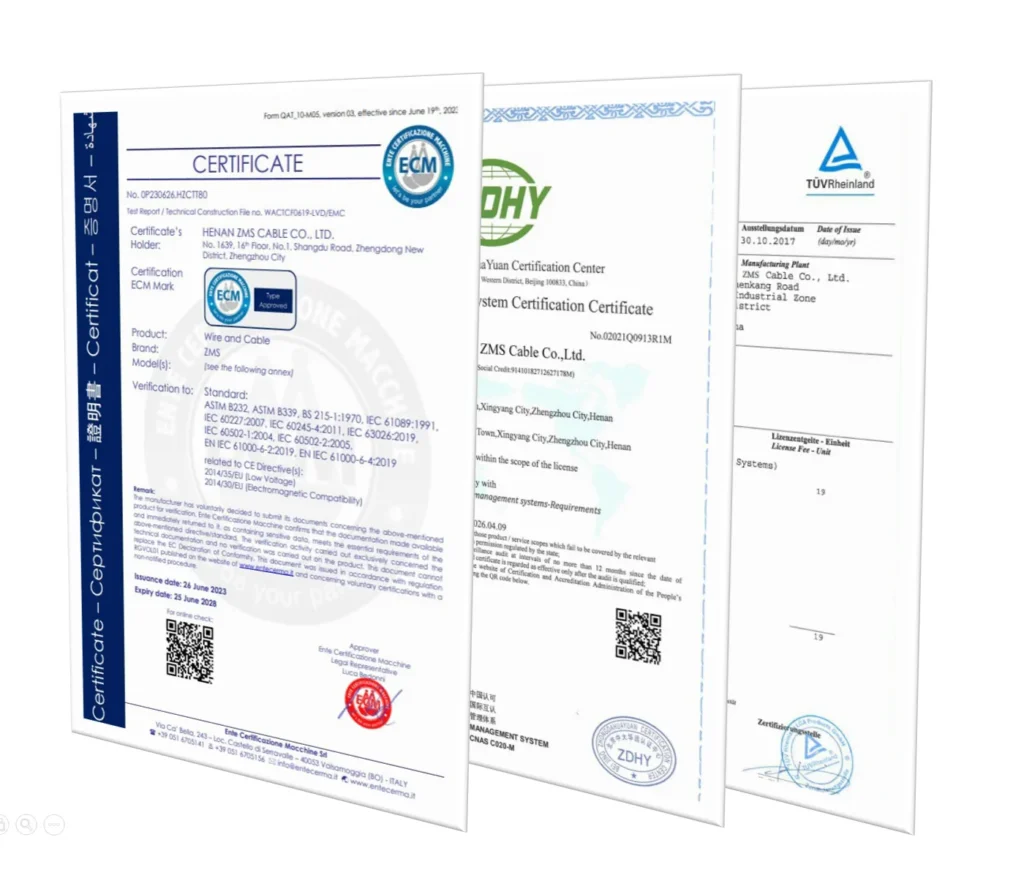
ABC cables are typically insulated with XLPE or PE. These insulation materials provide excellent electrical performance, UV resistance, moisture protection, and long outdoor service life.
4. What is the function of the neutral conductor in an aerial bundled cables ABC?
The neutral conductor carries unbalanced current and often acts as the supporting messenger for the bundled conductors. It improves both the mechanical strength and operational stability of the cable system.
5. Are ABC cables safer than traditional overhead power lines?
Yes. Compared with traditional bare overhead conductors, ABC cables significantly reduce the risk of electrical shock, short circuits, and power outages caused by trees, animals, or accidental contact.
6. Where are ABC cables commonly used?
ABC cables are widely used in overhead power lines for urban distribution, rural electrification, residential areas, industrial facilities, and utility projects where safety and reliability are essential.