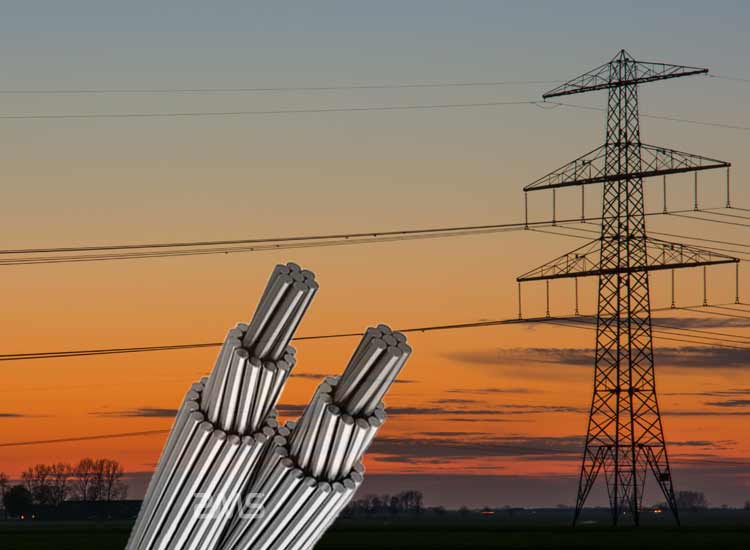
HTLS Conductor Manufacturer — High Temperature Low Sag
HTLS (High Temperature Low Sag) overhead conductors are designed to carry 1.5–2 times more current than conventional ACSR at operating temperatures up to 210 °C, with reduced sag at high temperatures.
We manufacture ACCC, ACCR, TACSR, and GAP-type conductors per IEC 61089, ASTM B232, and EN 50182, for transmission line uprates and new high-capacity lines.
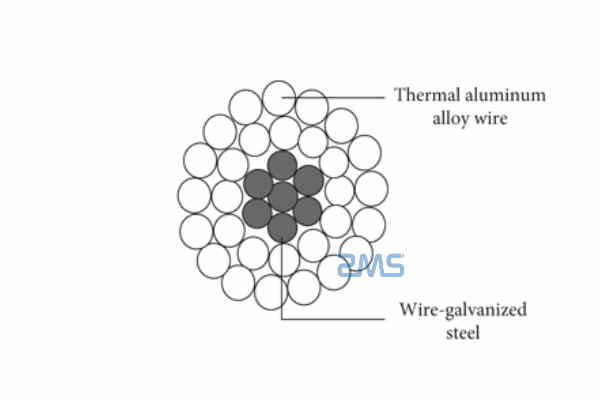
We manufacture the main HTLS conductor families
- ACSS / ACSS/TW (Aluminum Conductor Steel-Supported) — annealed aluminum over galvanized steel, operates to 200 °C
- TACSR / G(Z)TACSR (Thermal Aluminum Conductor Steel-Reinforced) — heat-resistant aluminum alloy over steel or invar core, operates to 150–210 °C
- ACCC / ACCC/TW (Aluminum Conductor Composite Core) — carbon-fiber composite core, operates to 200 °C, highest ampacity per diameter
- ACCR (Aluminum Conductor Composite Reinforced) — aluminum-zirconium over aluminum-steel composite core, operates to 210 °C
- Low sag at high temperatures — the core (invar, carbon composite, or steel) maintains mechanical strength at operating temperatures where ACSR would sag excessively
HTLS Conductor Specification & Technical Parameters
The HTLS cables produced by the ZMS manufacturer offer a wide range of advantages across a wide range of options. Today’s increased demand for electricity, the increasing difficulty of erecting the line corridors required for new overhead lines, and the rapid rise of renewable energy generation. There is an urgent need for transmission upgrades and transmission expansion.
High-temperature low sag conductors (HTLS conductors) are a new technology for upgrading transmission lines to increase the thermal rating to improve transmission capacity. HTLS conductors can operate at high temperatures (100 °C and above) for extended periods without significant deterioration in tensile strength or other mechanical, electrical, or chemical properties. The tensile length at the same temperature is significantly lower than that of conventional aluminum or steel core aluminum conductors.
Characteristics of HTLS Core Materials
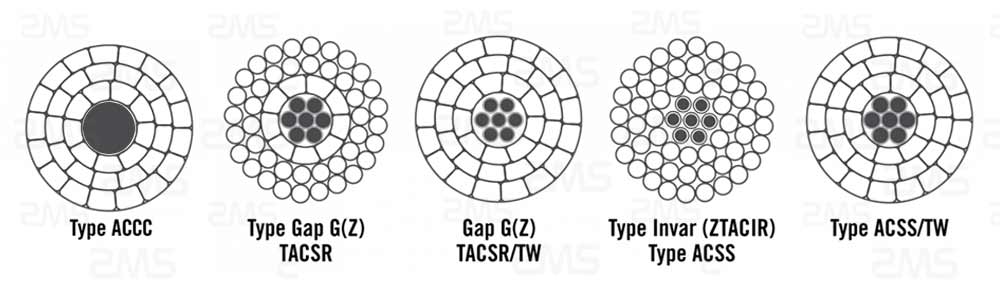
1. ACSS / ACSS/TW (Aluminum Conductor Steel-Supported / Trapezoidal Wire) — Annealed (soft) aluminum strands over a conventional galvanized steel core. ACSS/TW uses trapezoidal-shaped aluminum wires for a compact, larger aluminum cross-section. Continuous operating temperature: 200 °C; short-time: 250 °C.
Core Material | Min Tensile Strength (MPa) | Modulus of Elasticity (GPa) | Min Elongation (%) | Coeff. of Linear Expansion (10⁻⁶/°C) | Continuous Temp (°C) | Short-time Temp (°C) |
|---|---|---|---|---|---|---|
Galvanized Steel (Class A) | 1379–1448 | 206 | 3.0–4.0 | 11.5 | 180 | 200 |
Zn-5Al-MM Steel (B802) | 1379–1448 | 206 | 3.0–4.0 | 11.5 | 250 | 350 |
High-Strength Galvanized Steel (B606) | 1517–1620 | 206 | 3.0–3.5 | 11.5 | 180 | 200 |
Zn-5Al-MM Steel (B803) | 1517–1620 | 206 | 3.0–3.5 | 11.5 | 250 | 350 |
Ultra-High Strength Galvanized Steel | 1827–1965 | 206 | 3–3.5 | 11.5 | 180 | 200 |
Zn-5Al-MM Ultra High Strength Steel | 1827–1965 | 206 | 3–3.5 | 11.5 | 250 | 300 |
ACCC/TW Carbon Composite Core | 2137–2482 | 114 | 2.0 | 1.6 | 180 | 200 |
ACCR Composite Core | 1379 | 220 | 0.64 | 6.0 | 210 | 240 |
Aluminum-Clad Steel (ACS, 20.3% IACS) | 1034–1344 | 162 | 3.0 | 13.0 | 150 | 200 |
Aluminum-Clad Invar (14% IACS) | 1207–1276 | 152 | 3.0 | 3.7 | 210 | 240 |
Types of HTLS Conductor
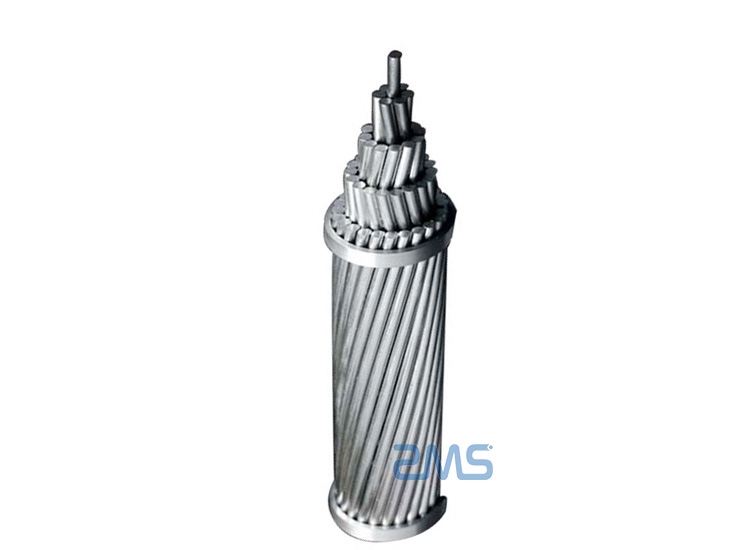
ACSS / ACSS/TW — Aluminum Conductor Steel-Supported
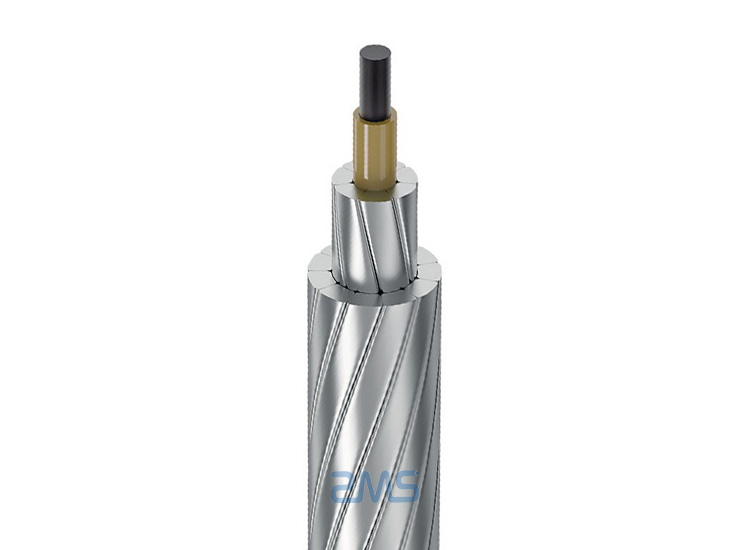
ACCC / ACCC/TW — Aluminum Conductor Composite Core
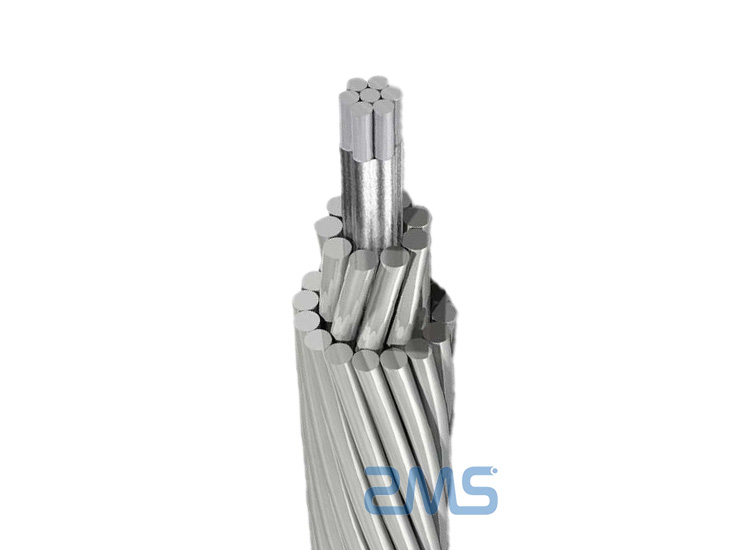
ACCR — Aluminum Conductor Composite Reinforced
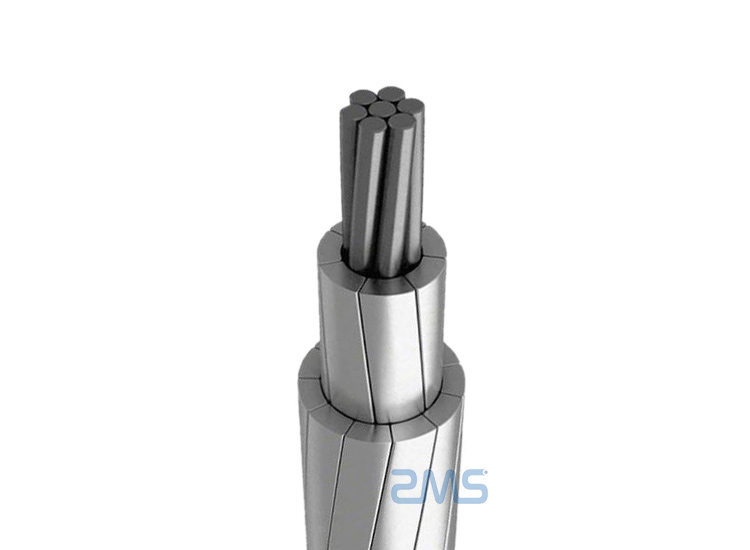
G(Z)TACSR — Gap-type TACSR
HTLS Conductor Size Range
HTLS Type | Aluminum Area Range | Equivalent ACSR | Core Option |
|---|---|---|---|
ACSS / ACSS/TW | 100–900 mm² | Dog to Bison | Galvanized / Galfan |
TACSR / G(Z)TACSR | 100–800 mm² | Dog to Rail | Steel / Galfan |
ZTACSR (Invar) | 150–700 mm² | Panther to Zebra | Invar steel |
ACCC / ACCC/TW | 100–1000 mm² | Dog to Overhead | Carbon composite |
ACCR | 150–800 mm² | Panther to Bison | Aluminum-steel composite |
HTLS Conductor Current Carrying Capacity
Equivalent ACSR size | ACSR ampacity (A) | ACCC ampacity (A) | Increase |
|---|---|---|---|
ACSR Dog (4/0) | ~320 | ~580 | +81% |
ACSR Panther (550 kcmil) | ~420 | ~780 | +86% |
ACSR Zebra (795 kcmil) | ~520 | ~950 | +83% |
ACSR Bison (1590 kcmil) | ~750 | ~1,350 | +80% |
Traditional ACSR vs. ACCC HTLS Conductor — Key Differences
Comparison Item | Traditional ACSR | HTLS (ACCC) |
|---|---|---|
Continuous operating temperature | 75–90 °C | 180 °C (short-time 200 °C) |
Ampacity (same diameter) | Baseline | 1.5–2× (+50–100%) |
Thermal expansion coefficient | ~11.5 × 10⁻⁶/°C | ~1.6 × 10⁻⁶/°C (1/7 of ACSR) |
Sag at high temperature | Significant sag as temperature rises | Minimal sag even at 180 °C |
Weight (same ampacity) | Heavier (larger diameter needed) | ~25–40% lighter |
Core material | Galvanized steel | Carbon-fiber composite |
Upfront cost per meter | Lower | Higher (~2–3×) |
Best application | New lines with standard loading | Line uprating on existing towers, limited corridors |
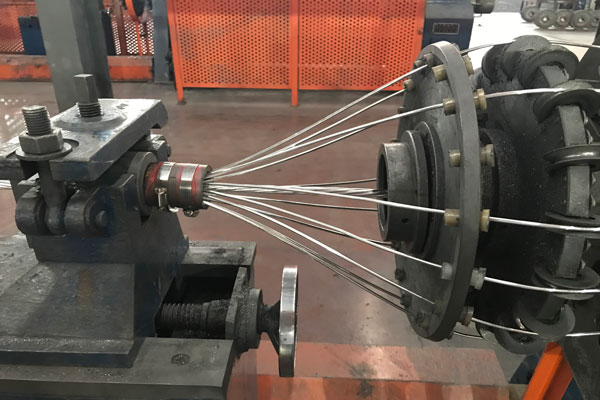
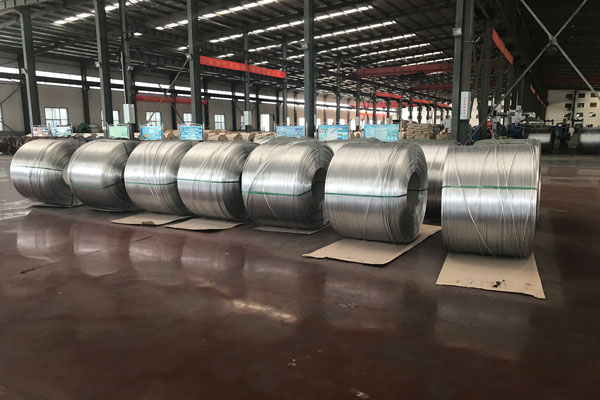
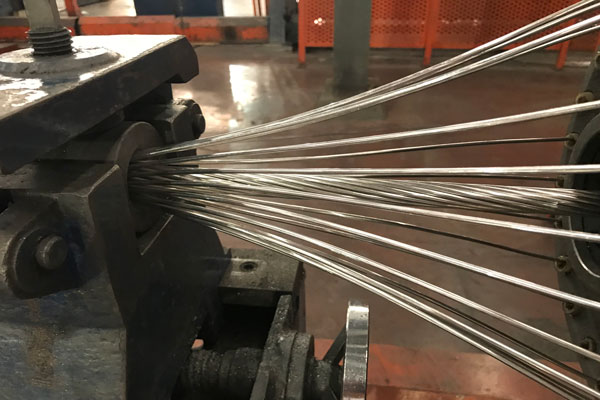
HTLS Conductor Manufacturing
- Conductor type (ACSS, ACCC, ACCR, TACSR — or let us recommend)
- Nominal area / equivalent ACSR size
- Core material requirement (galvanized steel, Galfan, invar, composite)
- Maximum continuous operating temperature
- Installation span, ice and wind loading conditions