YY LSZH (HSLH) control cables are flexible, unshielded, and multi-core, designed specifically for industrial automation and signal transmission applications. Featuring low-smoke, halogen-free insulation and sheathing, they are widely used as interconnecting cables for measuring, controlling, and regulating equipment in manufacturing plants, production lines, and mechanical systems. Compared to traditional PVC control cables (YSLY), HSLH materials offer higher fire safety, lower toxicity, and better environmental performance.
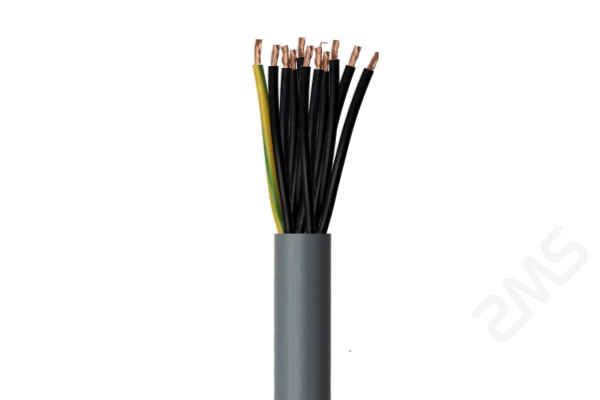
Table of Contents
ToggleYY LSZH Control Cable Structure
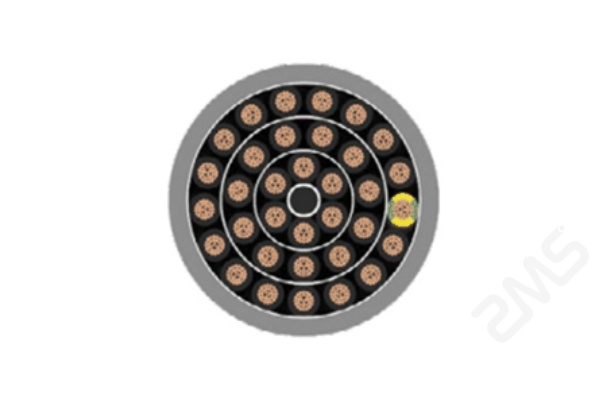
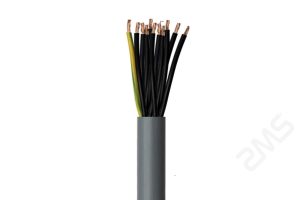
Typical construction of YY LSZH (HSLH) Control Cable:
- Conductor: Class 5 flexible copper conductor
- Insulation: LSZH compound
- Core Identification:
- Black cores with white numbering
- Green/Yellow earth core (optional)
- Outer Sheath: LSZH (Low Smoke Zero Halogen)
- Sheath Colour: Grey
Technical Parameters
| Parameter | Specification |
|---|---|
| Rated Voltage | 300/500V |
| Temperature Range | Fixed: -40°C to +80°C |
| / | Flexed: -15°C to +70°C |
| Minimum Bending Radius | 6×OD (fixed), 15×OD (flexed) |
| Conductor Class | Class 5 (Flexible) |
| Core Range | 2 – 25 cores |
| Cross Section | 0.5 – 35 mm² |
Key Features
LSZH Material (Low Smoke Zero Halogen): Minimal smoke and no toxic halogen gases in case of fire
High Flexibility (Class 5 conductor): Easy installation in moving and compact environments
Flame Retardant: Complies with IEC/EN fire performance standards
Oil & Chemical Resistant: Suitable for industrial environments
Unshielded Design (YY Type): Ideal for general control applications without EMI requirements
YY control cables are typically used for signal and control rather than power transmission
Applications
YY LSZH control cables are suitable for:
- Industrial automation systems
- Assembly and production lines
- Conveyor systems and machine tools
- HVAC, power plants, and engineering installations
- Data processing and control equipment
They are designed for flexible use with free movement and light mechanical stress, and can be installed in:
- Dry and damp indoor environments
- Occasional outdoor use (with UV protection)
But Not suitable for direct burial or heavy mechanical stress applications