As the global energy structure shifts towards a low-carbon model, offshore wind power is becoming a crucial direction for new energy development. Compared to onshore wind power, offshore wind power offers advantages such as stable wind resources, larger single-unit capacity, and less land occupation, leading to an increasing number of countries accelerating the construction of offshore wind power projects.
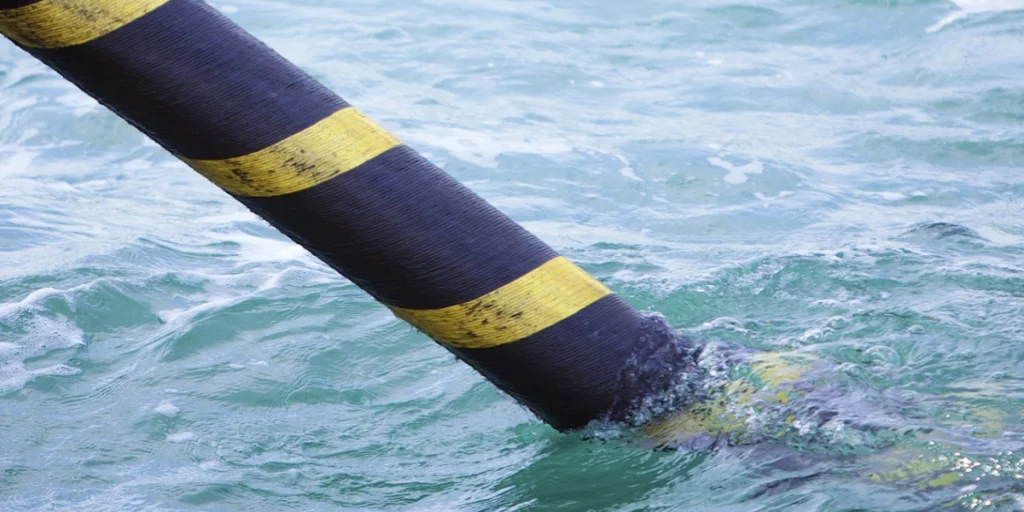
However, the development of offshore wind power not only means an increase in the number of wind turbines but also places higher demands on power transmission infrastructure. Submarine power cables, as core equipment connecting offshore wind turbines, offshore substations, and the onshore power grid, are experiencing rapid market demand growth.
From the array cables within offshore wind farms to the output cables connecting offshore substations and the onshore power grid, submarine electric cables have become an irreplaceable and vital component of the offshore new energy industry chain.
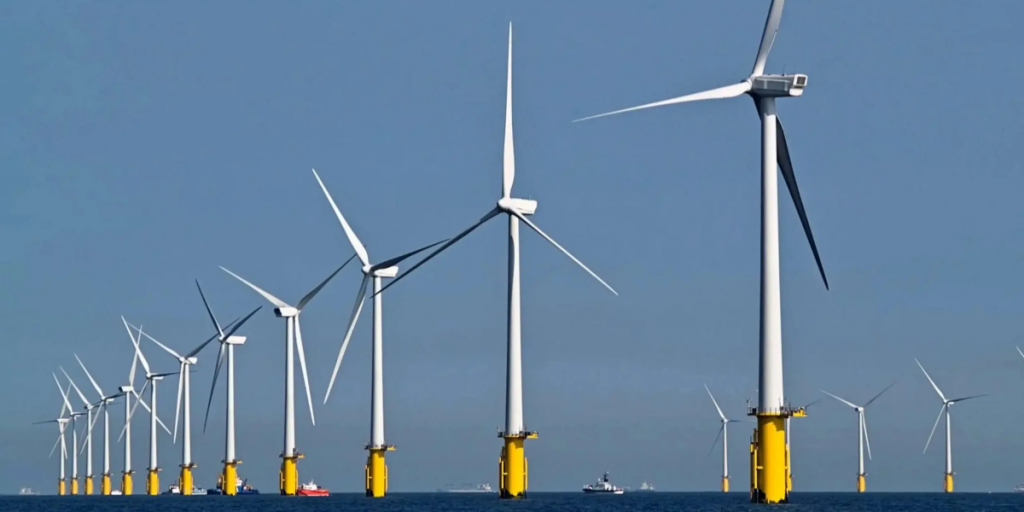
With the continuous expansion of global offshore wind power projects, increasing distances from shore, and upgrading of transmission voltage levels, the submarine cable market is expected to maintain strong growth over the next few decades.
Global Offshore Wind Power Enters a Phase Of Rapid Development
In recent years, many countries and regions around the world have been formulating more ambitious new energy development goals.
Europe, China, the United States, Japan, South Korea, and some Southeast Asian countries have all included offshore wind power as an important component of their future energy strategies.
The main factors driving the development of offshore wind power include:
| Driving Factors | Impact on the offshore wind power industry |
| Global carbon emission reduction targets | Accelerate the construction of new energy projects |
| Energy security needs | Increase investment in domestic renewable energy |
| Advances in wind turbine technology | Promote the construction of large-scale offshore wind farms |
| Growth in electricity demand | Increase demand for long-distance power transmission |
| Policy support | Increase the long-term project pipeline |
According to global energy development trends, the new offshore wind power capacity will continue to increase in the future, and each large-scale offshore wind power project requires a large number of submarine cables for support.
Why Is Offshore Wind Power Driving The Growth Of Submarine Cables?
The biggest difference between offshore wind power projects and onshore wind power projects is that:
Electricity generated offshore must be transmitted to the onshore power grid via submarine cables.
A complete offshore wind power transmission system typically includes:
Wind Turbine → Inter-array Cable → Offshore Substation → Export Cable →Onshore Grid
Each step requires different types of cables.
Main Types Of Cables Used In Offshore Wind Power
| Cable Types | Main Function |
| Inter-array Cable | Connecting multiple fans |
| Export Cable | Transmitting electricity to land |
| Dynamic Cable | Used for floating wind power |
| Undersea Fiber Cable | Communications and monitoring |
| Control Cable | Equipment control system |
Specifically:
- Inter-array cables are responsible for power aggregation between wind turbines;
- Export cables are responsible for large-scale, long-distance power transmission.
As the capacity of offshore wind power projects increases, the number, length, and technical requirements of these cables are constantly rising.
Offshore Wind Power Increases The Use Of Subsea Cables
Early offshore wind power projects were typically located close to the coast and were relatively small in scale.
However, in recent years, offshore wind power has been developing towards larger capacities, longer distances, and deeper waters.
Comparison Of Old And New Offshore Wind Power Projects
| Project Features | Early Offshore Wind Power | Next-Generation Offshore Wind Power |
| single-machine capacity | 3-5 MW | 12-18 MW or even higher |
| Wind farm size | tens of MW | Hundreds of MW to GW |
| offshore distance | 20-40 km | 80-200 km or more |
| Power transmission methods | HVAC is the main function. | HVAC+HVDC |
| Cable demand | less | Significantly increased |
As wind farms are located further offshore, the length of export cables is increasing significantly.
For example, a large offshore wind power project may require:
- tens or even hundreds of kilometers of output cables;
- a large array of cables connecting the wind turbines; and
- high-voltage submarine cables for long-distance power transmission.
Therefore, the growth in offshore wind power capacity directly drives the growth in demand for submarine cables.
Submarine Cable Technology Upgrades Meet The Needs Of Large-Scale Offshore Wind Power
As project scale expands, traditional cables can no longer fully meet the demands.
Modern submarine cables face challenges such as:
- seawater corrosion
- submarine pressure
- wave motion
- ship anchor damage
- seabed changes
- long-term operational reliability. Therefore, submarine cable manufacturing technology requires continuous upgrading.
Main Technical Requirements For Subsea Power Cables
LPE insulation: Improves withstand voltage.
Waterproof structure: Prevents moisture ingress.
Metal sheath: Enhances shielding performance.
Steel wire armor: Strengthens mechanical protection.
Long-distance manufacturing capability: Reduces the number of joints.
High-voltage testing: Ensures operational reliability.
Especially in large-scale offshore wind power projects, cable failures can lead to huge economic losses, making reliability a crucial procurement indicator.
Hvdc Technology Drives High-Voltage Submarine Cable Market Growth
As offshore wind farms are located further and further from land, high-voltage direct current (HVDC) transmission technology is being widely adopted.
Compared to traditional alternating current (AC) transmission, HVDC offers advantages such as lower transmission losses, suitability for long-distance transmission, fewer cables, and higher system efficiency.
Comparison of HVAC and HVDC Submarine Cables
| ITEM | HVAC Cable | HVDC Cable |
| Applicable distance | medium and short distances | Long distance |
| Transmission loss | higher | lower |
| System complexity | lower | higher |
| Initial investment | lower | higher |
| Future application trends | Stablize | rapid growth |
As more and more offshore wind power projects are built in locations far from the coast, the demand for HVDC Submarine Cables will continue to increase.
Floating Offshore Wind Power Is Creating New Demand For Subsea Cables
As near-shore wind power resources mature, more and more countries are turning their attention to deeper waters. Traditional fixed offshore wind power is typically suitable for water depths of 50 meters or less, but in deeper waters, the cost of constructing fixed foundations rises rapidly. To develop these wind energy resources, floating offshore wind power is becoming a new direction for global offshore wind power development.
Unlike traditional offshore wind turbines, floating turbines are mounted on floating platforms and secured to the seabed by anchor chains. This structure allows the turbine to move to a certain extent with waves and ocean currents, thus placing entirely new technical requirements on the cables.
Traditional submarine cables remain largely stationary after laying, while the dynamic cables used in floating wind power need to withstand complex loads such as bending, tension, and torsion over long periods. Over an operating cycle of two to three decades, the cable may experience millions of bending cycles. Insufficient fatigue resistance can lead to insulation damage, armor breakage, or even conductor failure.
Therefore, dynamic cables are more complex than ordinary submarine cables in terms of structural design, material selection, and manufacturing processes. For example, it typically employs a more flexible armored structure, a higher level of waterproofing system, and a more stringent fatigue life design to ensure long-term stable operation in complex marine environments.
Although floating offshore wind power is still in a phase of rapid development, with the increasing number of deep-sea wind power projects, dynamic submarine cables will become a new growth point in the future submarine cable market, bringing new market opportunities to companies with R&D and manufacturing capabilities.
Looking Ahead: The Undersea Cable Market Will Continue Its Long-Term Growth
Considering current global energy development trends, offshore wind power will remain one of the most important new energy industries for the next few decades.
As countries continue to advance their energy transition, more and more large-scale offshore wind power projects will be launched. From nearshore to deep-sea, from stationary to floating wind power, from AC transmission to high-voltage DC transmission, the application scope of submarine cables will further expand, and technical requirements will continue to rise.
For submarine cable manufacturers, this presents both opportunities and challenges. On the one hand, continued market demand growth provides the industry with vast development space; on the other hand, project scale is increasing, and customer requirements are becoming more stringent. ZMS cable manufacturers will continuously improve their R&D capabilities, manufacturing capabilities, and international project experience, inevitably maintaining a competitive advantage in the global market.
It is foreseeable that in the future, submarine cables will not only be a power transmission product, but also a crucial energy infrastructure connecting offshore wind power resources with the terrestrial power grid. With the continued expansion of the global offshore wind power industry, the submarine cable market will also usher in a broader development prospect.