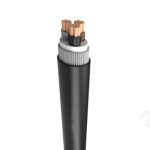
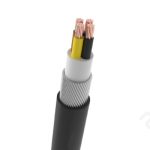
N2XRH cable is a low-voltage power cable designed for reliable power distribution in industrial facilities, commercial buildings, and public infrastructure projects. It typically features XLPE insulation and low-smoke zero-halogen (LSZH) sheath materials, helping reduce smoke emission and halogen acid gas release under specified test conditions. Commonly rated at 0.6/1 kV, N2XRH cable is suitable for installations where electrical reliability and fire-related safety requirements are important.
Table of Contents
ToggleN2XRH Cable Structure


Conductor: Class 2 stranded copper conductor in accordance with IEC 60228.
Insulation: Cross-linked polyethylene (XLPE), providing reliable electrical insulation and thermal stability.
Inner Sheath / Bedding: LSZH compound, where applicable, to protect and separate the cable core assembly.
Armor (if applicable): Steel wire armour for additional mechanical protection, depending on the cable design.
Outer Sheath: Low-smoke zero-halogen (LSZH) compound, designed to reduce smoke emission and halogen acid gas release under specified test conditions.
Filler (if applicable): LSZH compound used to fill gaps between cores in multicore cable designs.
Sheath Color: Typically black; other colours may be available subject to manufacturer specifications.
Product Features of N2XRH Cable
Fire Retardant Performance
This N2XRH cable adopts low‑smoke halogen‑free (LSZH) materials for sheath, insulation and fillers to restrict flame propagation. It complies with IEC 60332‑1‑2 for single‑cable flame retardancy and Class C of IEC 60332‑3‑24 for bunched cable installations.
Halogen‑Free & Low Smoke
Tested to IEC 60754, the N2XRH cable releases no toxic or corrosive halogen gases during fire. It achieves extremely low smoke density under fire conditions per IEC 61034‑2, ideal for enclosed spaces where evacuation visibility matters.
SWA Mechanical Protection
Fitted with robust steel wire armour (SWA), this N2XRH cable delivers strong resistance against impact, compression and external mechanical loads, supporting direct burial and heavy‑duty installation.
Weather & Corrosion Resistance
The standard LSZH outer sheath provides good UV‑resistance and weathering performance for outdoor and underground laying. It offers resistance against common chemical corrosion, extending service life within municipal and industrial distribution networks.
Note: Standard N2XRH is NOT oil‑resistant. Select modified‑compound versions if oil exposure is expected.
N2XRY Cable Specification
| Voltage Rating Uo/U | Temperature Range | Max. Temperature During Short Circuit (≤5S) | Flame Retardant | Chemical Resistance | Min. Bending Radius |
| 0.6/1kV | -15℃ to +90℃ (operating) | 250°C | Complies with IEC 60332-1-2; Class C IEC 60332-3-24 | Resistant to common acids and alkalis; Not suitable for continuous oil exposure | 6 × overall diameter for conductors ≤25mm²; 8 × overall diameter for conductors >25mm² |
Structural Parameters
| Conductor Size (mm2) | No. of Strands | Insulation Thickness (mm) | Outer Diameter (mm) | Approx. Weight (kg/km) |
| 1.5 | 7 | 1 | 6 | 80 |
| 2.5 | 7 | 1.2 | 7.2 | 120 |
| 4 | 7 | 1.4 | 9 | 180 |
| 6 | 7 | 1.6 | 10.5 | 250 |
| 10 | 7 | 1.8 | 13 | 400 |
Applications
This cable model conforms to European standards for low-voltage, multi-core, low-smoke, halogen-free steel wire armored power cables. It features low dielectric loss and high mechanical strength, and is primarily used in residential or industrial energy networks with frequent load fluctuations. It can be laid outdoors, underground, and in areas expected to experience sudden mechanical stress. It is also suitable for locations where fire, smoke, and toxic gases may pose a potential threat to life and equipment.
Applications Include:
Industrial plants and factories
Public buildings, hospitals, and schools
Underground and indoor facilities
Power distribution and control systems
Locations requiring fire safety and the use of low-smoke, halogen-free materials.
What is the difference between N2XRH Cable & N2XRY Cable?
The main difference between N2XRH Cable and N2XRY Cable, as their names suggest, lies in the “H” and “Y”.
“H” indicates a halogen-free outer sheath, typically made of flame-retardant, low-smoke materials. In a fire it produces almost no corrosive halogen acid gases or large amounts of dense smoke, making it more suitable for locations with extremely high safety requirements, such as subways, hospitals, tunnels, and public buildings.
“Y” indicates a halogenated PVC sheath, generally flame-retardant, but not halogen-free. This is a standard XLPE power cable used in industrial power distribution and engineering projects, offering a more economical price and suitable for environments without strict halogen-free requirements, such as general factories, power distribution systems, and underground and outdoor installations.
These are their most fundamental differences, but they also lead to other subtle variations between them.
| Item | N2XRH Cable | N2XRY Cable |
| Outer Sheath | Low smoke halogen-free LSZH | PVC (containing halogens) |
| Conductor/Insulation Structure | Cu conductor + XLPE insulation | Cu conductor + XLPE insulation |
| During a Fire | Less smoke and no halogenated acid gases make it more friendly to personnel and equipment. | The smoke is quite thick, producing halogenated acid gases, which are corrosive and irritating. |
| Safety & Environmental Protection Levels | High safety and environmental protection, suitable for places with strict fire prevention requirements. | Standard safety level, meeting the power needs of general industrial and building applications. |
| Typical Application Scenarios | Subways, hospitals, shopping malls, public buildings, tunnels, data centers | Factory power distribution, power stations, underground cables, outdoor and general commercial buildings |
| Cost | Typically higher | Relatively more economical |
| Your Should Choice | Focus on environments characterized by “low smoke and halogen-free production, high population density, and expensive equipment”. | Focus on “cost-effectiveness, mechanical strength, and general engineering power distribution”. |